Commercial Gym Equipment Buying Guides
Practical global resources for importers, distributors, gym owners and private-label brands comparing equipment, suppliers, OEM options, installation preparation and shipment requirements.
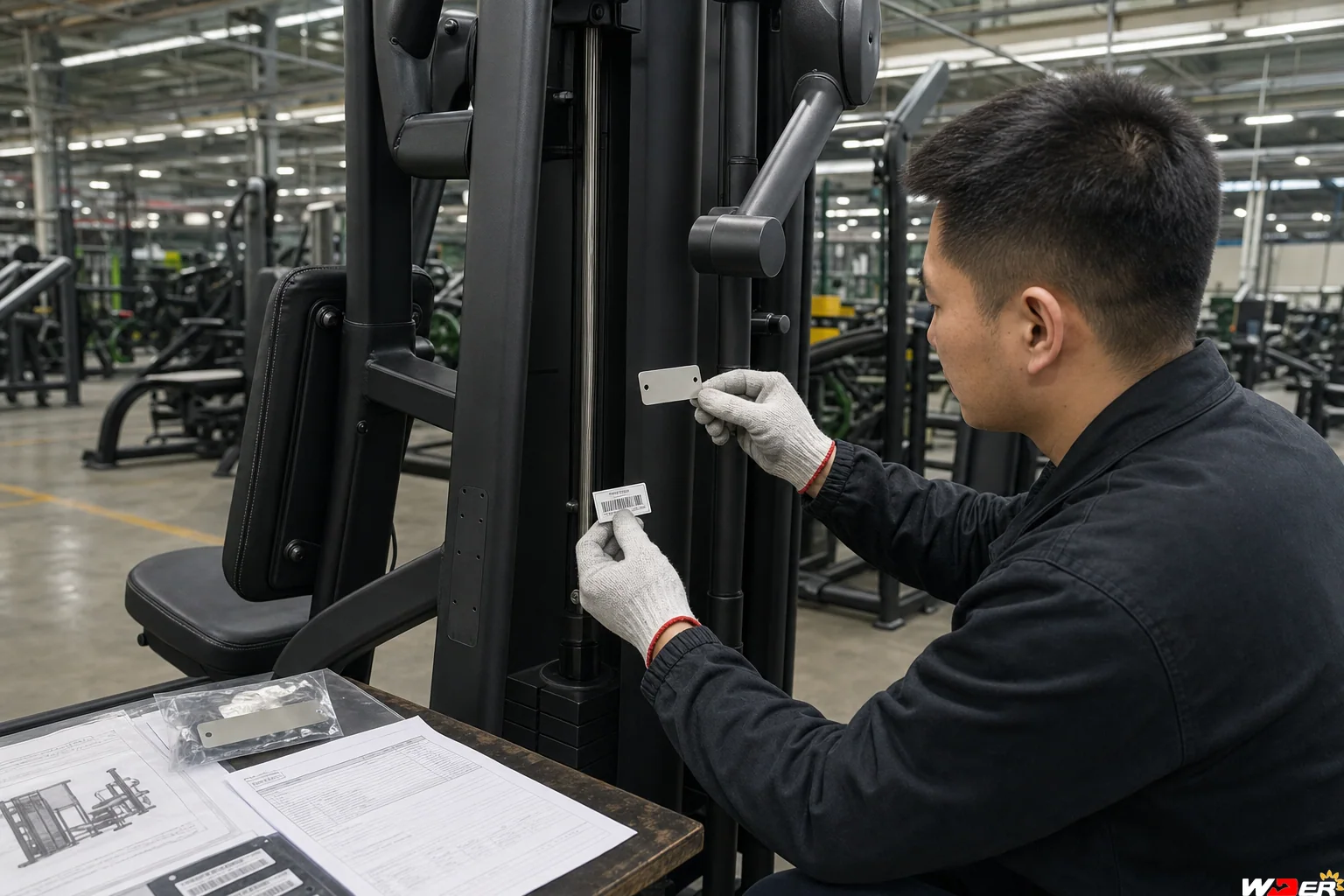
OEM Gym Equipment Rating Plate and Serial Number Control Guide
The required content depends on product type and destination, but the plate should match the approved responsible entity, model identity and applicable technical data. Electrical products may require voltage, frequency, power or other ratings. Control artwork revision, durable material, readable placement and unique serial or batch references, and keep the production record linked to the exact shipped model.
Read Guide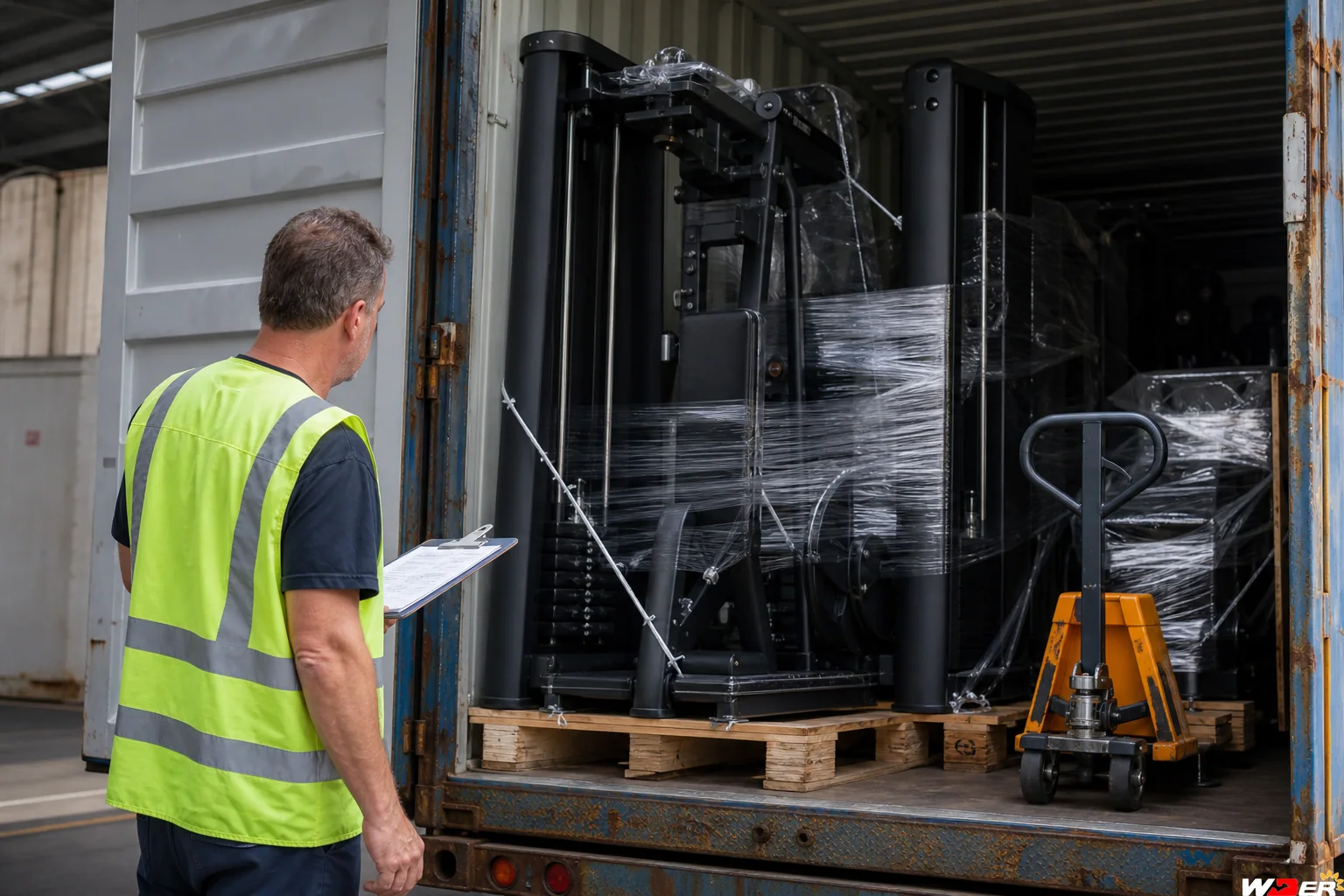
Gym Equipment Container Unloading and Receiving Safety Guide
Review the packing list, loading photos, package weights, centers of gravity and unloading sequence before opening the doors. Use competent personnel, suitable lifting equipment, controlled door opening and an exclusion zone for unstable cargo. Stop if packages have shifted or restraints are loaded. Record seal, container and damage condition before moving affected packages.
Read Guide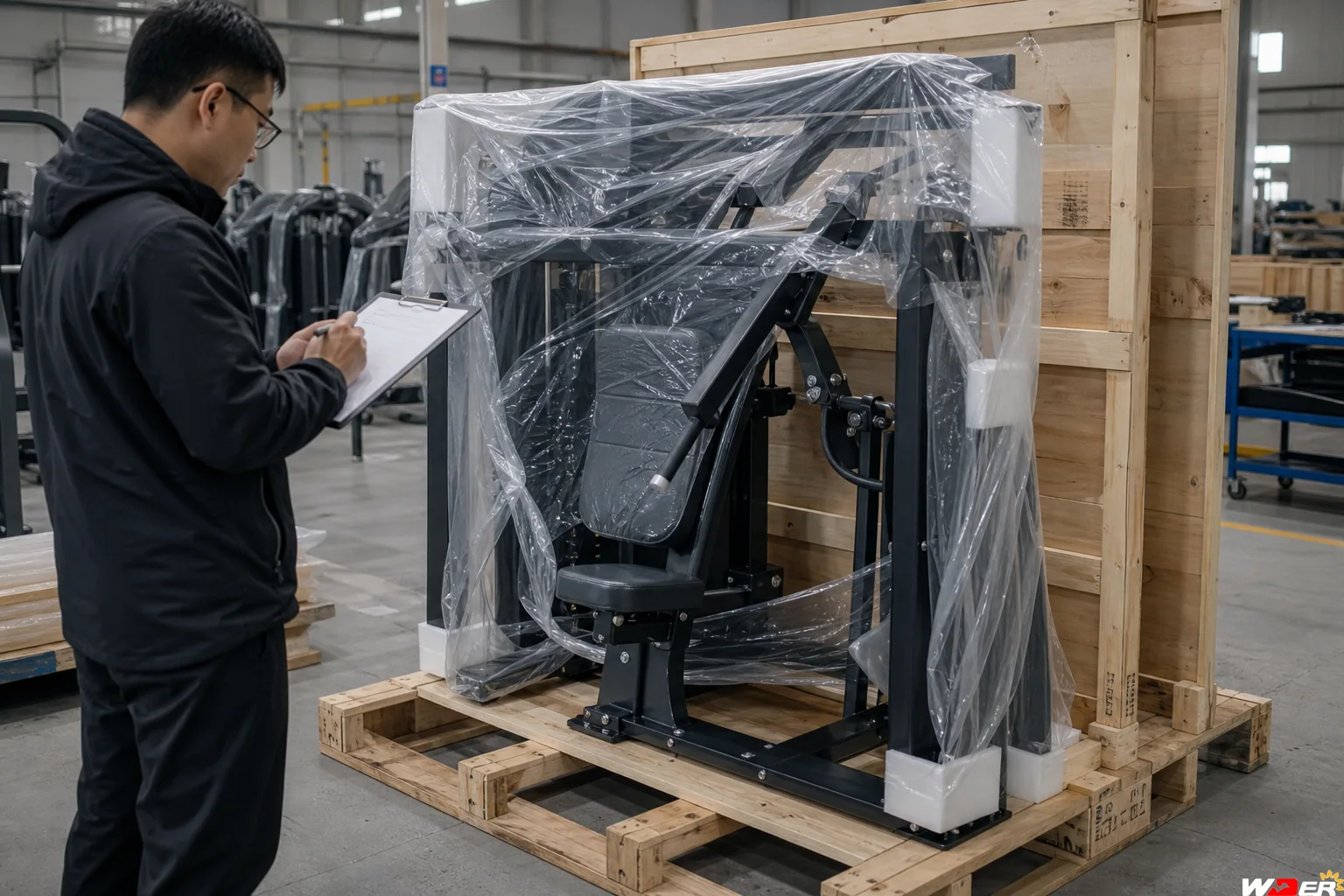
Commercial Gym Equipment ISPM 15 Wood Packaging Guide
ISPM 15 generally applies to regulated solid-wood packaging used in international trade, such as pallets, crates, blocking and bracing. Buyers should identify the wood components, confirm approved treatment and legible compliant marks, and check destination-country implementation before shipment. Manufactured wood products may be treated differently, so the final requirement must be verified with the forwarder or authority.
Read Guide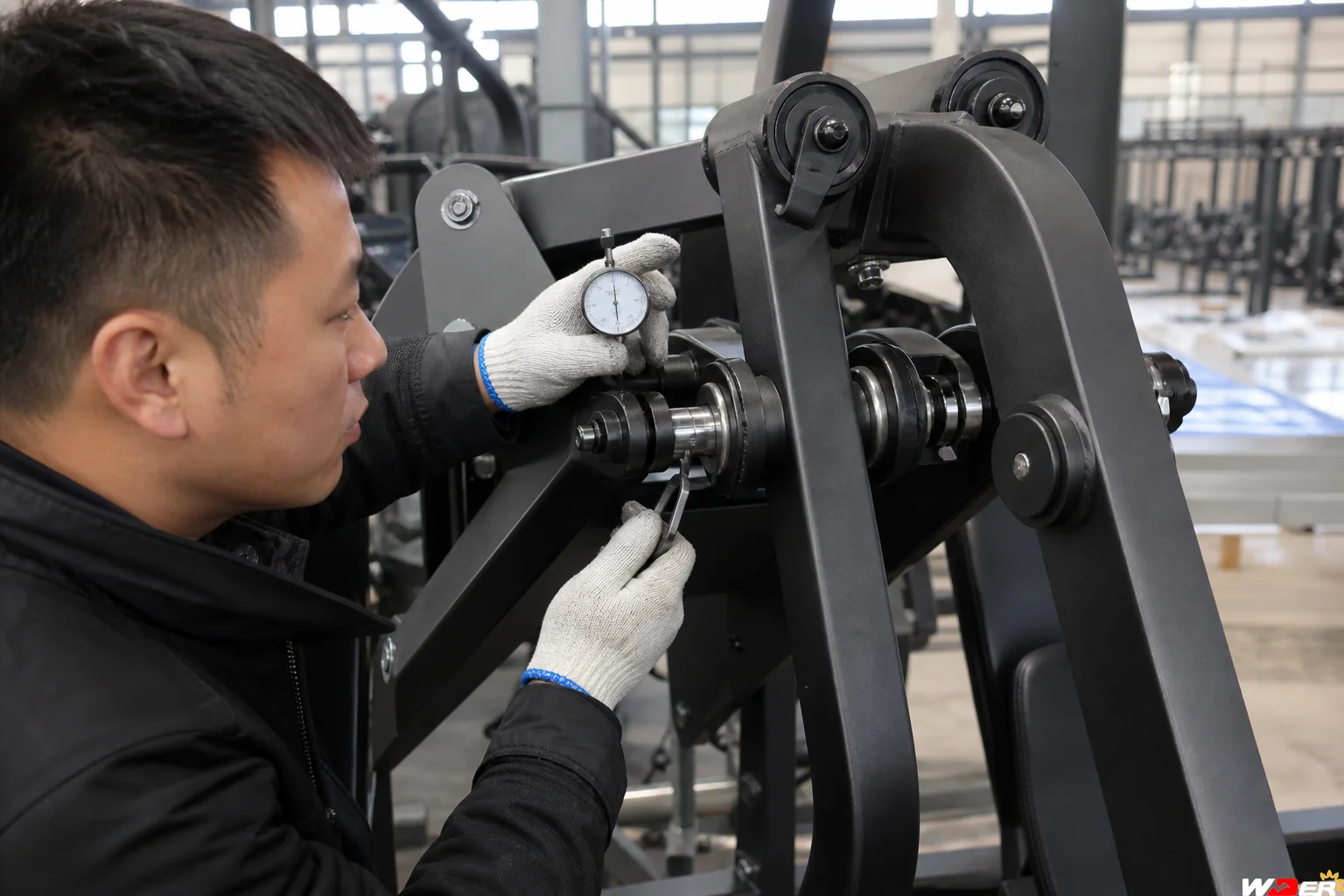
Plate-Loaded Machine Pivot, Bearing and Bushing Inspection Guide
Confirm pivot alignment, the specified bearing or bushing type, correct fit, retained hardware and the absence of abnormal axial or radial play. Move the arm through its complete path unloaded and with an agreed representative load while checking friction, noise and side movement. Lubrication and allowable clearance must follow the model design and approved acceptance criteria.
Read Guide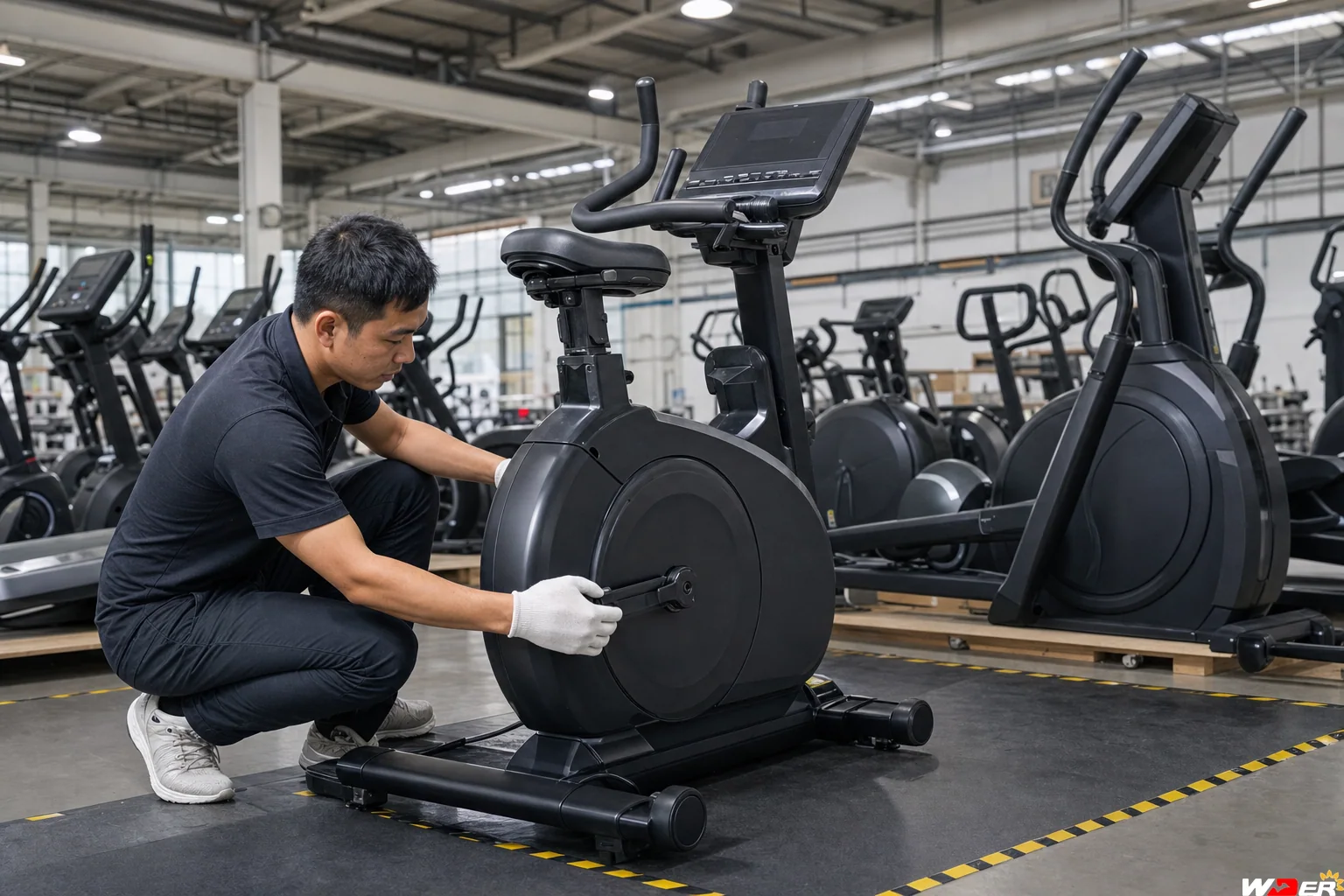
Commercial Bike and Elliptical Resistance System Inspection Guide
Test every stated resistance level or a defined representative sequence while checking that console commands produce stable, repeatable changes. Inspect the flywheel or resistance unit, drive belt, crank, pedals, wiring and moving joints for noise, hesitation, heat and looseness. The test must match the exact magnetic, electromagnetic or mechanical system and its intended commercial duty.
Read Guide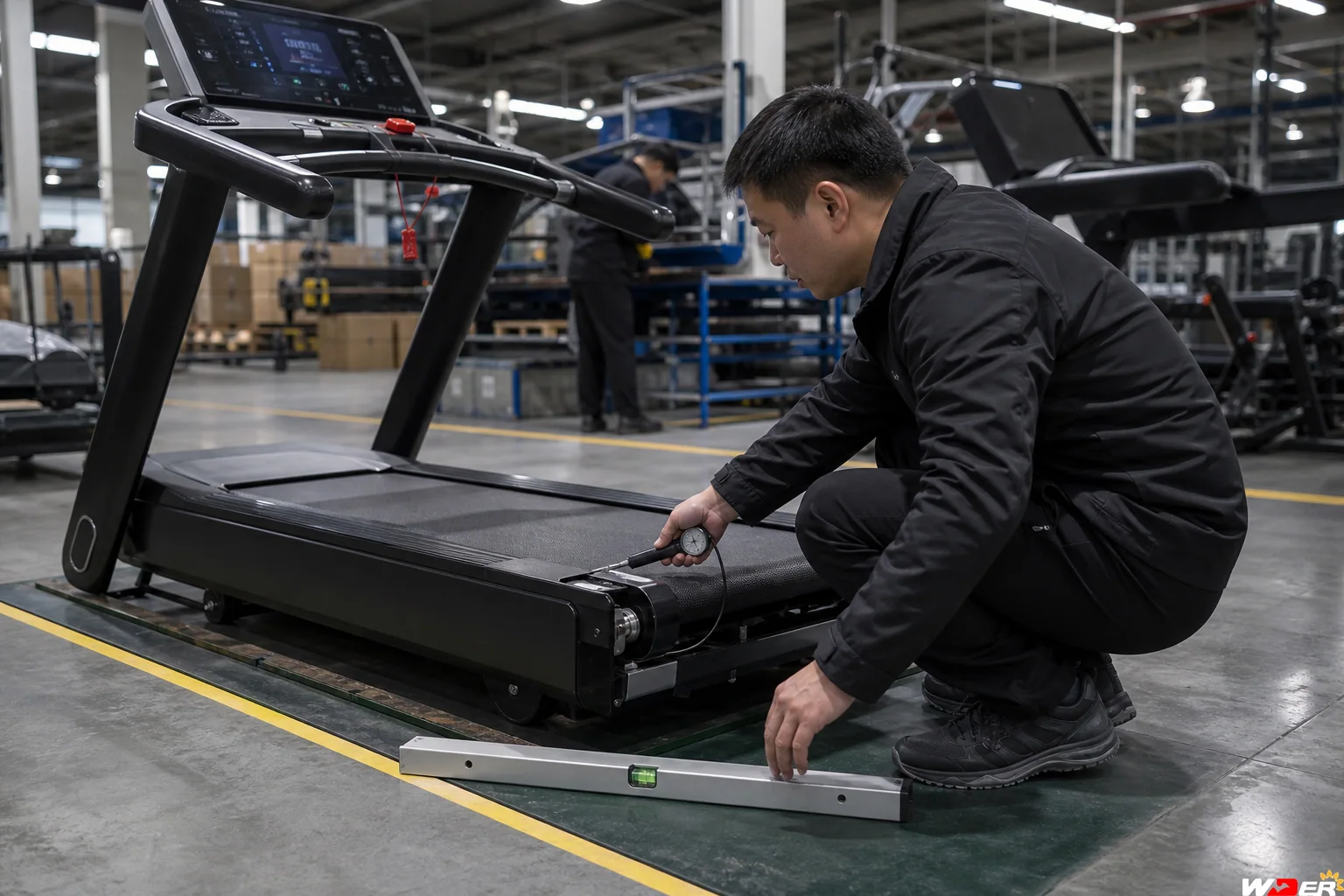
Commercial Treadmill Running Belt Tension and Tracking Inspection Guide
Set running-belt tension with the manufacturer's model-specific method, then verify centering and tracking across the stated speed range and representative user load. Check roller alignment, belt slip, edge contact, noise, heat and deck condition. Adjust both sides in controlled increments and repeat the test after transport, leveling and initial operation; over-tensioning can shorten component life.
Read Guide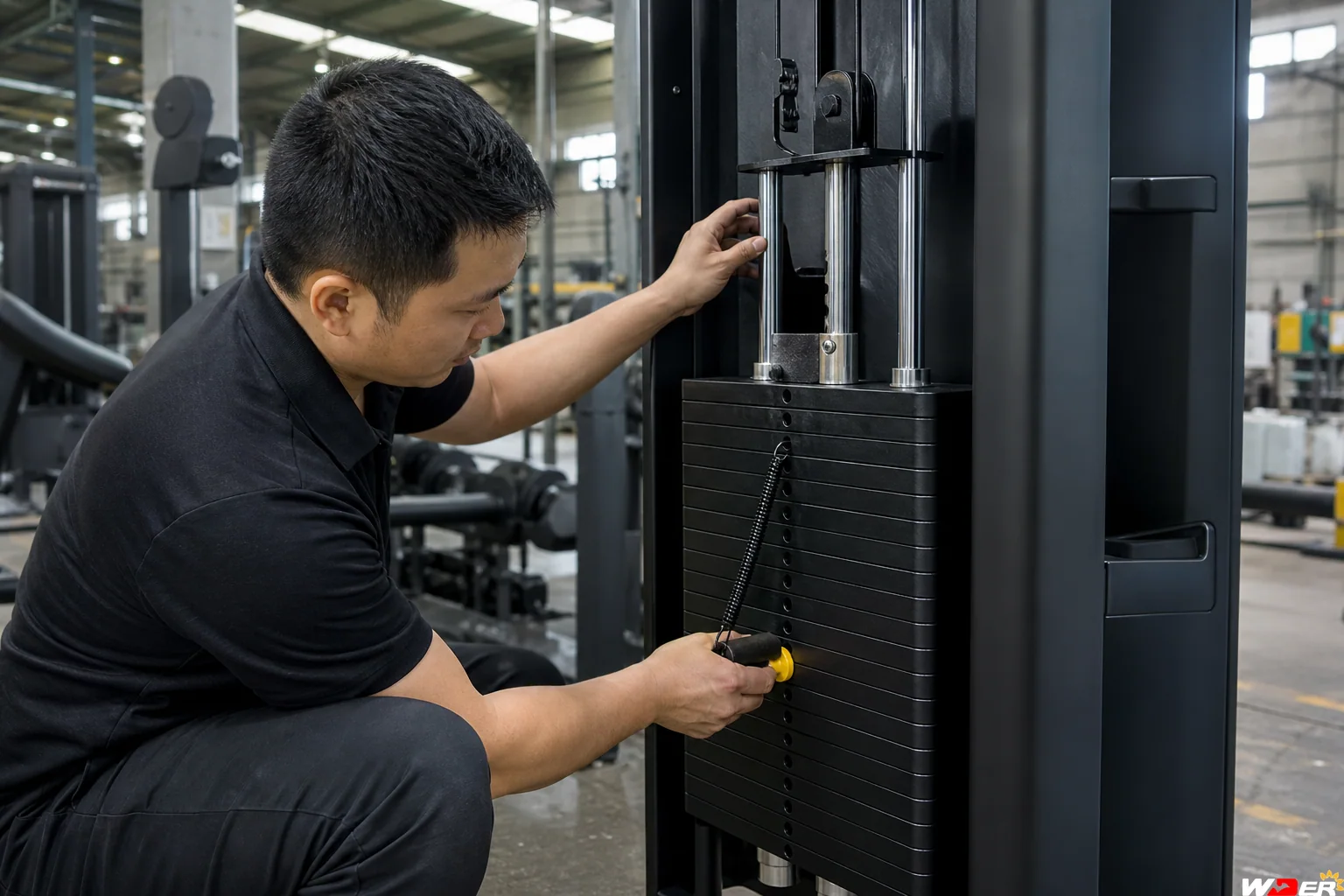
Selectorized Weight Stack and Guide Rod Alignment Inspection Guide
Confirm that guide rods are straight, clean, secure and correctly spaced; the top plate and stack plates should travel without binding or visible tilt. Check selector-pin engagement at every position, cable pull, plate separation and return behavior through the full range. Lubrication, cleaning and acceptance criteria must follow the selected model rather than a universal rule.
Read Guide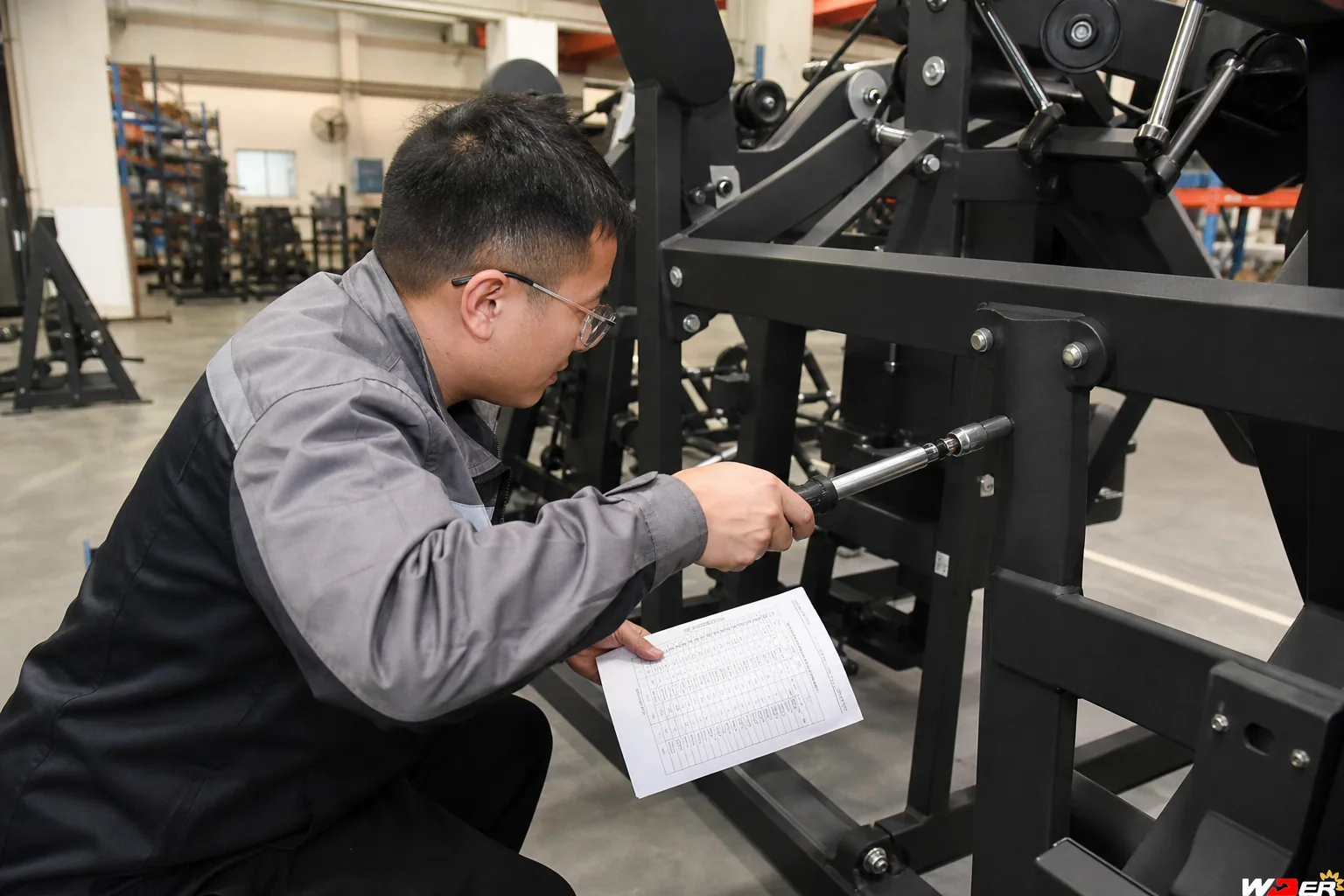
Commercial Gym Equipment Fastener Torque Inspection Guide
Use model-specific torque values from the approved assembly or engineering record, a calibrated torque tool and the stated tightening sequence. Inspect the correct fastener grade, washer and thread engagement before tightening. Apply witness marks only after verification, then recheck safety-critical joints after transport and installation. A generic maximum setting is not an acceptable substitute for model-level instructions.
Read Guide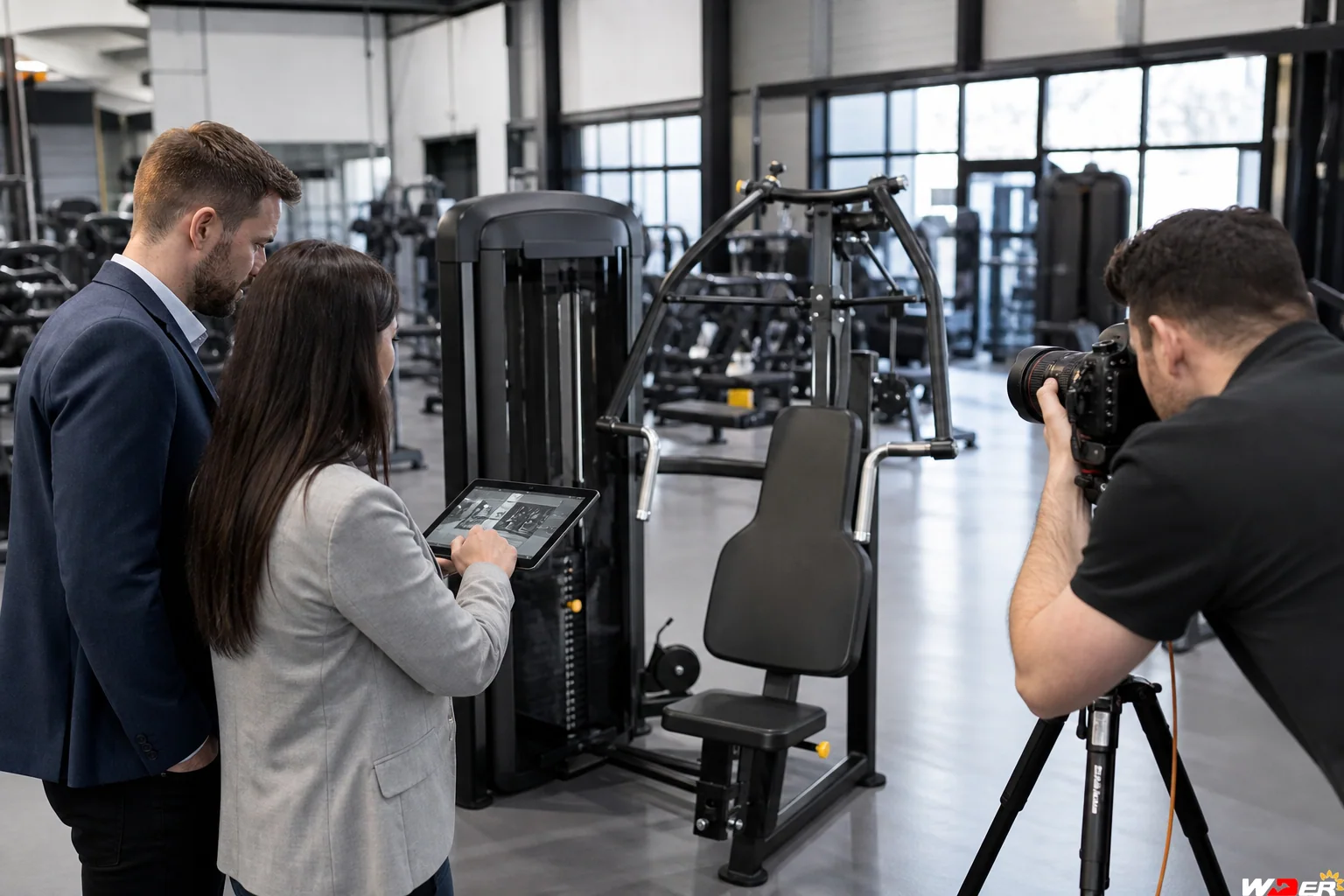
Gym Equipment Distributor Product Launch Data Pack Guide
A launch data pack should contain approved product images, exact model codes, dimensions, configuration, buyer-relevant features, application notes, manuals, parts references, packing data, warranty wording and OEM assets. Every claim should trace to an approved source. Use revision control so website, catalog, quotation and service teams publish the same product facts.
Read Guide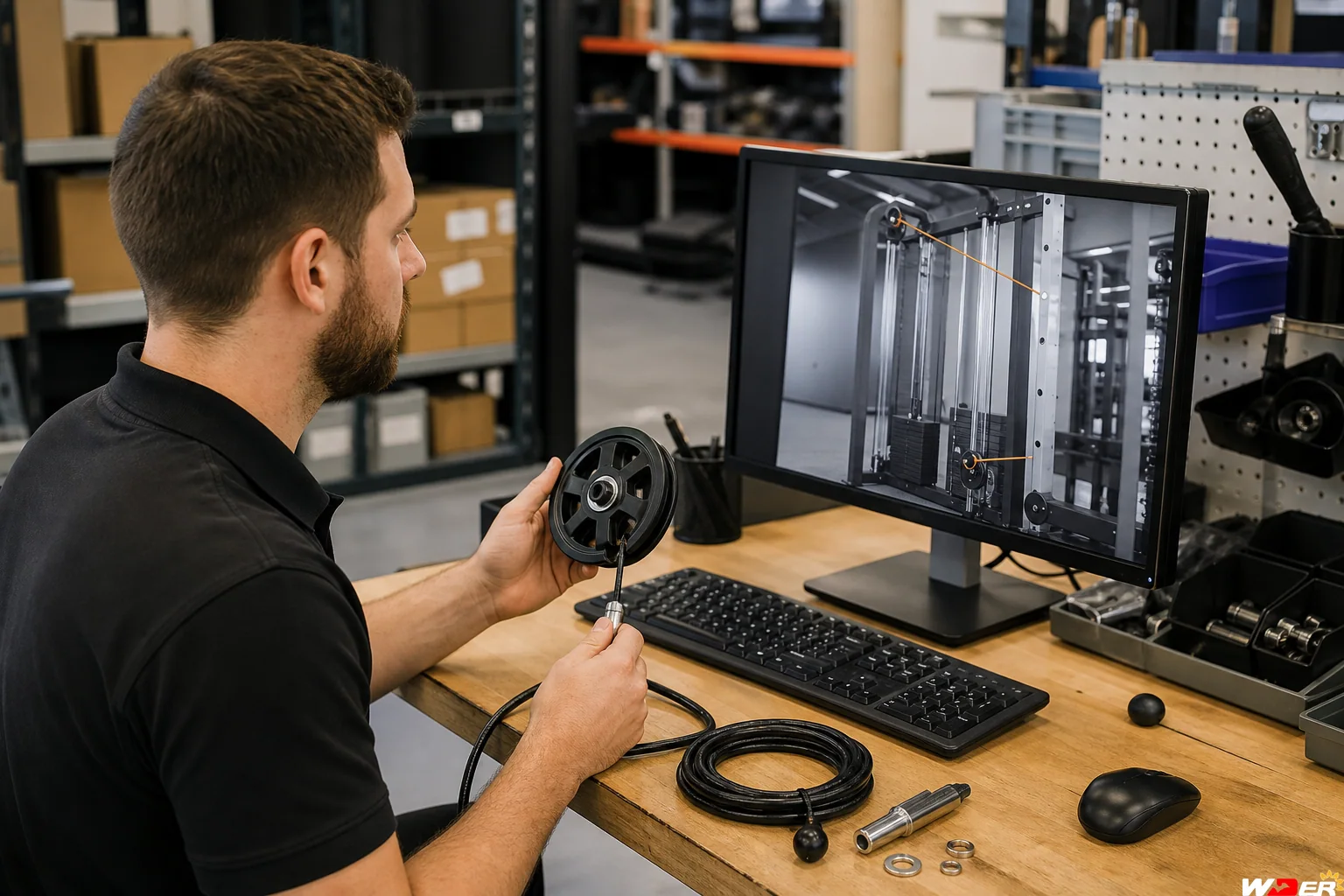
Commercial Gym Equipment Warranty and Spare Parts Response SLA Guide
An after-sales SLA should define claim intake fields, acknowledgement and technical-review stages, required evidence, part-identification method, warranty decision, dispatch options, buyer and supplier responsibilities, and escalation. Response time should be stated by stage rather than as one vague promise. Actual coverage, freight responsibility and service commitments must be agreed in the contract.
Read Guide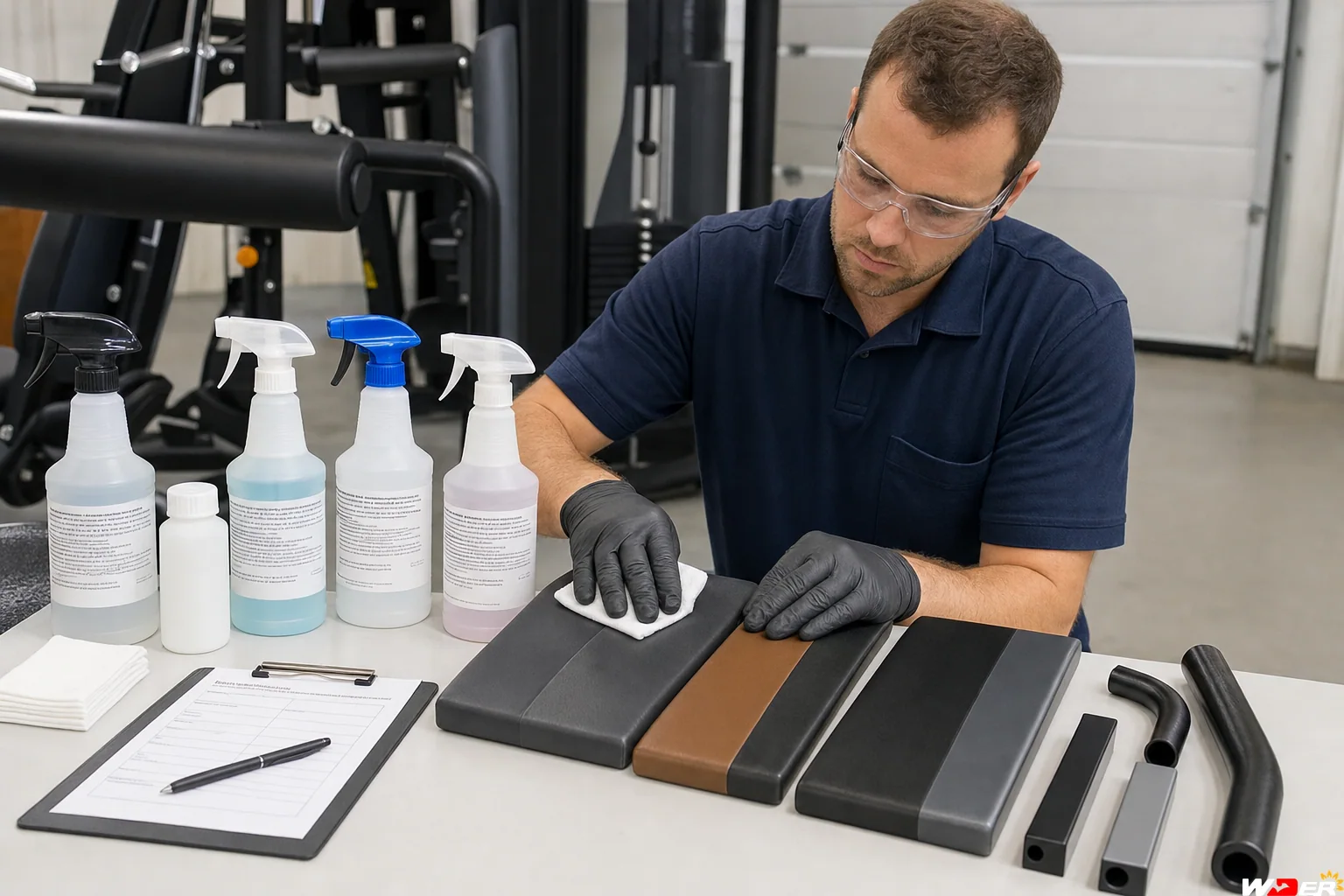
Commercial Gym Equipment Cleaning Chemical Compatibility Guide
Use the equipment supplier's material-care guidance and the chemical manufacturer's instructions. Confirm compatibility with upholstery, powder coating, plastics, screens, decals and adhesives; control dilution and contact time; and test a hidden area before broad use. Do not mix chemicals. Staff should remove residue and report discoloration, hardening, cracking or label damage early.
Read Guide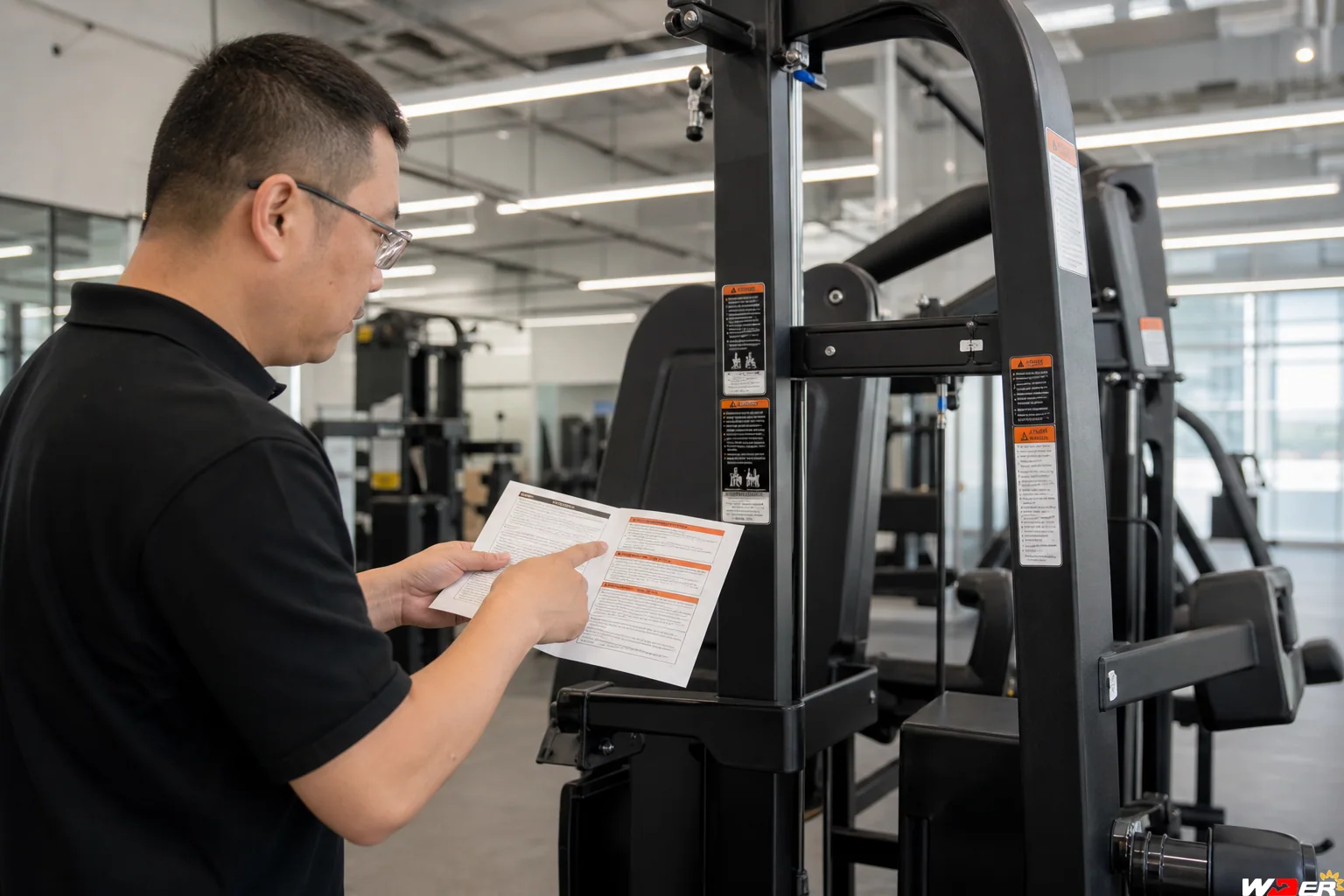
OEM Gym Equipment Warning Label and Manual Localization Guide
Confirm destination requirements, approved source text, qualified translation review, exact model identity, label material, size, placement, durability and document revision. Safety meaning must be preserved rather than rewritten as marketing copy. The buyer should approve artwork and manuals before production, then verify application and carton matching during shipment inspection.
Read GuideNeed a quotation, catalog or OEM product plan?
Send your target market, product categories and quantity. WDER will help prepare suitable model suggestions.
Contact WDER