
Introduction
B2B buyers do not search for commercial gym equipment content only for education. They usually need to make a decision: which products fit the project, which supplier can support the order, what details must be confirmed before deposit, and how to reduce problems during production, shipment inspection and installation preparation. This guide is written for regional distributors and dealers launching or refreshing a private label fitness equipment showroom. It uses practical export-order thinking rather than generic fitness advice.
Quick Answer
A private label gym equipment showroom should present the distributor’s core equipment range, sample finishes, upholstery colors, logo options, product specifications and service promise. The best showroom is not only attractive; it helps buyers test movement quality, compare configurations and submit clear requirements for quotation.
Why This Topic Matters for Buyers
A showroom can look impressive but fail to convert if it lacks clear product positioning, sample logic and inquiry workflow. In commercial fitness projects, small details can become expensive when they are discovered after production or after goods arrive. A reliable buying process should connect product application, specification confirmation, factory testing, shipment inspection, delivery planning and after-sales support.
Select a Focused Product Mix
A distributor showroom does not need to display every model. It should show the product categories that best represent the target market: plate loaded machines for strength clubs, selectorized lines for hotels and commercial gyms, benches and racks for free-weight areas, and a few cardio models if the distributor sells full packages. The mix should support realistic buyer conversations.
Use Samples to Explain Customization
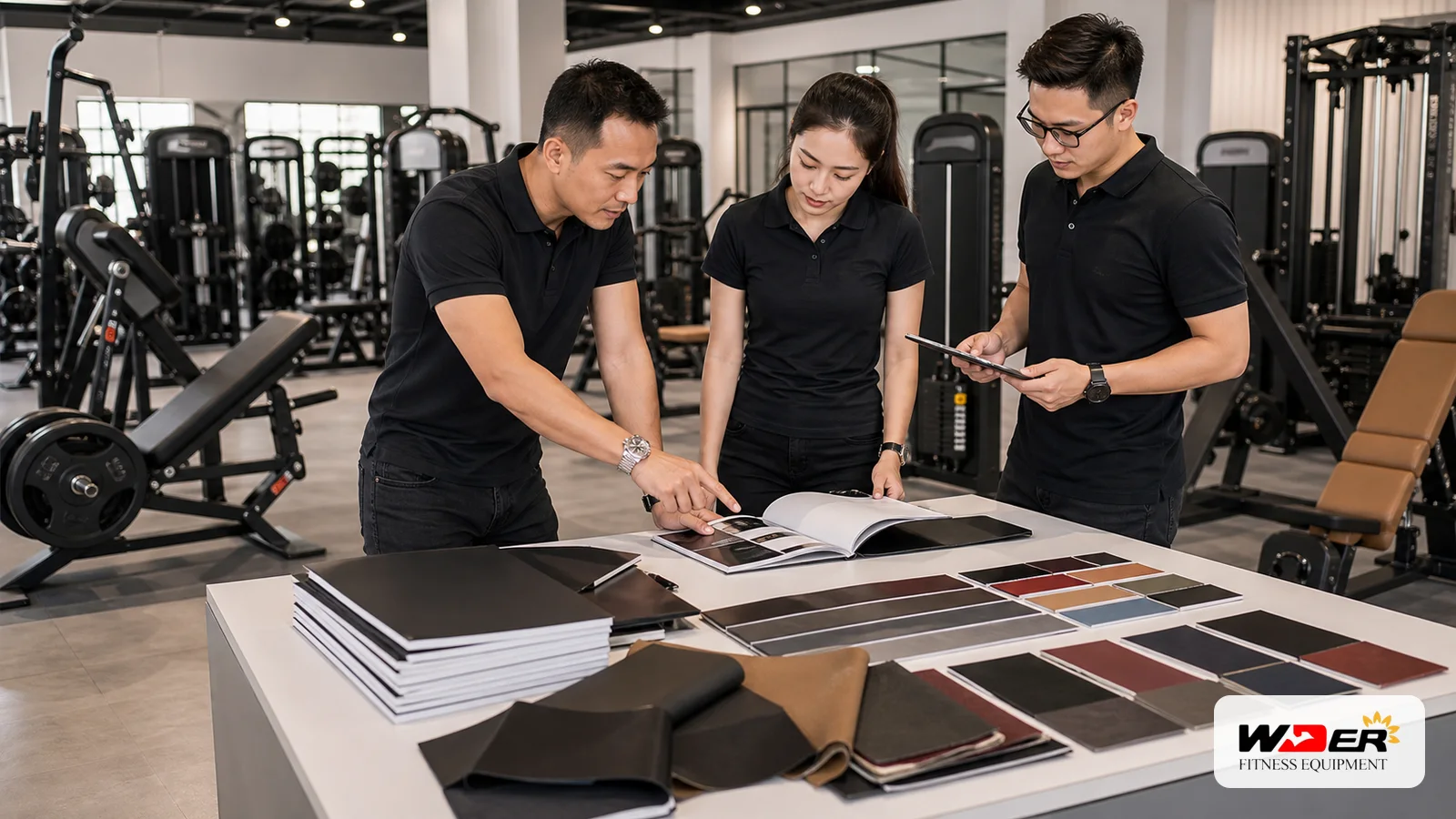
Private label buyers often ask about frame color, upholstery color, logo placement, grip style and packaging. Show physical swatches and finished details instead of relying only on a catalog. A clean sample area helps buyers understand what can be customized and what should remain standard for quality and lead time control.
Prepare Sales Materials and Quotation Flow
The showroom should help staff collect requirements quickly. Prepare model lists, specification sheets, application photos, project references, spare parts notes and RFQ forms. When a visitor is ready to ask for price, the sales team should be able to collect quantity, site type, budget range, destination and timeline without friction.
Plan Inventory and After-Sales Support
A showroom launch should connect to inventory planning. Display models may become demo units, but distributors should also plan sample stock, fast-moving spare parts and replacement upholstery. A private label brand becomes credible when customers can see that service and parts are part of the offer.
Buyer Checklist
- Showrooms should support product testing, not only photography.
- Physical swatches improve private label discussions about color and upholstery.
- A clear RFQ workflow turns showroom visits into usable sales opportunities.
- Ask for clear photos or videos when a specification, test result or packing detail affects the order.
- Keep quotation, invoice, inspection notes and installation requirements in one project file.
- Use internal links and product references so the supplier can respond with a practical quotation instead of a generic catalog.
Mid-Article CTA
If you are preparing a commercial gym equipment order, send WDER your product list, quantity, destination country, required delivery term and customization notes. Our team can review the requirements and help you prepare a practical quotation scope.
Recommended Internal Links for Next Step
- Review WDER's commercial gym equipment supplier options.
- Check factory production and QC capability before confirming a supplier.
- Use gym project planning support if you are planning a full facility.
- send your requirements for quotation support.
FAQ
How many machines should a distributor showroom display?
The number depends on space and market focus. A smaller focused showroom can work well if it demonstrates the main product categories and customization options.
Should private label logos be shown on sample machines?
Yes, if the distributor has approved artwork and placement. Logo samples help customers understand branding quality.
What documents should be ready in the showroom?
Prepare product specifications, quotation forms, warranty notes, spare parts references and installation planning documents.
Conclusion
Private Label Gym Equipment Showroom Launch Plan for Distributors is not only a content topic; it is a procurement control point. Buyers who confirm specifications, test requirements, documentation, packing and service expectations early usually get a cleaner order process and fewer surprises after delivery. For overseas B2B projects, the most useful supplier is one that can explain details clearly and support the order from RFQ to after-sales service.
Final CTA
Send your requirements to WDER Fitness with product category, quantity, destination, voltage or customization needs and target delivery time. We can help prepare a quotation, product recommendation and shipment-ready order plan for your market.