
Plate Loaded and Selectorized Mix Procurement Matrix for Chain Buyers is a practical topic because many multi-site buyers already know they need both styles, but they do not know how to balance them. Too much plate loaded equipment can narrow member appeal and increase coaching demand. Too much selectorized equipment can reduce perceived training depth for stronger users. The right mix depends on business model, training behavior, floor area and maintenance reality.
WDER Fitness supports B2B buyers that need commercial strength equipment packages rather than isolated machines. In real projects, plate loaded and selectorized lines are usually combined with dumbbells, benches, racks, functional stations and cardio equipment. The decision should be made as part of a broader commercial package, not as a single product debate.
Quick Answer for Google AI Overview
Chain buyers should use a simple procurement matrix to decide the plate loaded and selectorized mix: member profile, coaching level, floor area, premium positioning, maintenance capacity, training intensity and target budget. Selectorized equipment usually improves accessibility and throughput. Plate loaded equipment usually improves premium feel and advanced strength appeal.
The strongest commercial plan often uses selectorized machines as the coverage base and plate loaded machines as targeted hero pieces for locations where advanced training demand is higher.
Build the Decision Around the User Profile
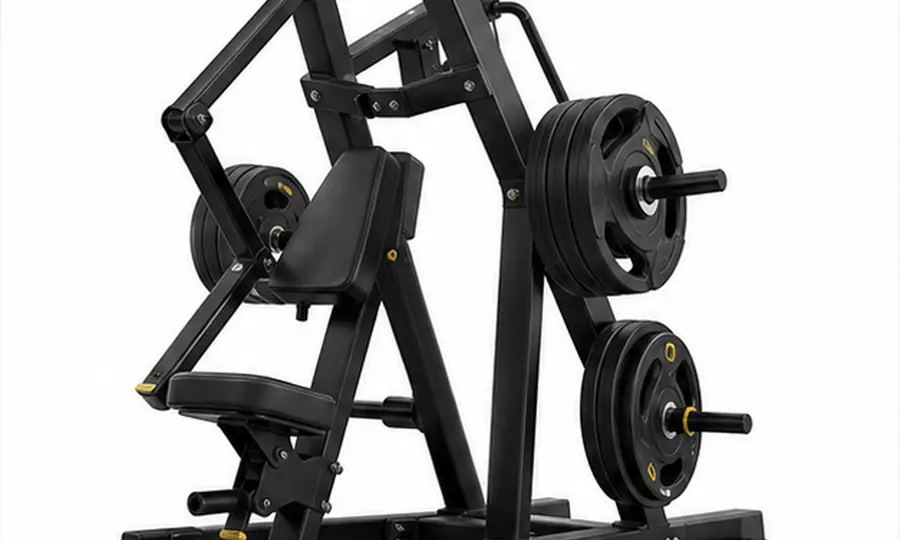
If the location serves a broad mainstream member base, selectorized machines usually deserve a larger share. They are easier to understand, quicker for circuit use and better for lower-supervision environments. If the location targets strength-led members, bodybuilding-focused clubs or premium performance segments, plate loaded units often deserve more floor space.
The mistake is assuming the same ratio works everywhere. A hospitality gym, a city chain, a premium suburban club and a performance flagship should not have the same procurement formula. Buyers should assign equipment ratio by site role rather than by personal preference.
Compare Accessibility, Not Just Training Feel
Plate loaded machines often look more serious and can feel more natural for stronger users, but that does not automatically make them more commercially effective. Selectorized equipment often wins on accessibility, quick weight changes and new-member confidence. For chain operators, this affects retention, onboarding and trainer efficiency.
A practical matrix should therefore measure who can use the machine with minimal explanation, how fast users can move through a workout, and how the line supports the gym's core member mix. Commercial success is not only about biomechanics. It is also about how many members can use the zone effectively every day.
Space and Layout Should Influence the Ratio
Some plate loaded units require more generous circulation and plate management discipline. Selectorized stations can often fit into cleaner circuits and give a more predictable member flow. If the club is compact, space efficiency may push the mix toward selectorized equipment. If the club has a dedicated performance area, plate loaded systems can add stronger identity and more serious training value.
The layout question also affects adjacencies. Plate loaded units often work best near dumbbells, benches and racks. Selectorized zones may work better in guided strength sections or mixed member circuits. Buyers should plan the whole experience, not only the machine count.
Use CAPEX and Service Load as Separate Metrics
Some buyers compare only first cost. That is incomplete. CAPEX and service load should be reviewed separately. Plate loaded equipment may simplify some mechanical systems but can create more plate-management demands. Selectorized equipment may improve user access but needs careful cable, pulley and stack maintenance planning.
The right procurement matrix should therefore score purchase cost, durability, member fit, service burden, replacement-part availability and visual value independently. WDER can support this by discussing product-family logic, factory QC and export planning across both equipment styles.
Create a Site-by-Site Mix Instead of a Universal Rule
A useful matrix may result in one flagship location using a 40/60 plate-loaded-to-selectorized ratio while a compact city club uses 20/80. The important part is not the exact number. The important part is that the buyer can explain why the ratio exists.
This is especially important for chain rollouts and distributor proposals. A supplier quotation becomes more useful when the buyer already knows which locations need performance emphasis, which need mainstream guidance and which need a balanced hybrid line.
Manufacturer and Supplier Questions to Clarify
Ask how the supplier recommends the line by user level, what frame and upholstery standards can be repeated across both equipment families, and how spare parts are handled across future orders. Buyers should also ask whether appearance can stay consistent when combining plate loaded and selectorized units in one branded gym.
Another important question is whether the supplier understands how to quote the line as a system rather than as isolated SKUs. Commercial buyers benefit when the factory can help structure zones, package logic and receiving sequence instead of simply sending a list of models.
Internal WDER Buying Path
Useful next pages for buyers: commercial gym equipment catalog, plate loaded machine category path, WDER factory verification, OEM and private label support, gym project planning, commercial project cases, send a quote request. These pages help move from product comparison into actual package planning and supplier verification.
If you need to compare one location only, the plate loaded category page may be enough. If you need a branded multi-club program, combine that category path with the OEM and gym solutions pages before final RFQ work begins.
Common Buyer Errors
One common error is buying the same line ratio for every location because one site performed well. Another is judging plate loaded equipment only by appearance while judging selectorized equipment only by price. Both decisions ignore who will actually use the equipment and how the club operates.
Another error is failing to connect the line decision with free weights and benches. Plate loaded equipment is rarely evaluated correctly if the surrounding strength zone is ignored. Commercial procurement should always assess the ecosystem.
FAQ
Which is better for chain gyms, plate loaded or selectorized?
Neither is universally better. The best choice depends on member profile, coaching level, available space, maintenance capacity and brand positioning.
Should chain buyers always mix both systems?
In many commercial clubs, yes. Selectorized equipment often provides accessible coverage, while plate loaded equipment adds premium strength appeal where demand justifies it.
How should I compare the two systems commercially?
Score accessibility, training appeal, footprint, service burden, repeat-order consistency, visual value and target member fit, not just purchase price.
Can WDER help recommend a ratio?
Yes. WDER can review your club format, member profile and project scope, then discuss more suitable strength equipment combinations.
What pages should I review before sending an inquiry?
Review the strength category, the catalog, the gym solutions page and the factory page so your inquiry includes product scope, project context and supplier-verification needs.
Suggested CTA
Request Plate Loaded and Selectorized Mix Support: send your club type, target members, floor area and preferred training style. WDER can help recommend a more practical commercial ratio.
A Practical Inquiry Example
A useful inquiry might say: "We are opening three clubs with different positioning. Please suggest how to balance selectorized machines and plate loaded units for a mainstream site, a premium site and a performance-focused site. We also need matching benches, racks and free-weight support, plus export packing and repeat-order guidance."
This kind of inquiry helps the factory recommend systems by site role instead of forcing the buyer to compare machines one by one without a commercial framework.
Final Buyer Reminder
The plate loaded versus selectorized conversation becomes more useful when it changes from opinion into a matrix. Chain buyers should document why each system earns floor space, what user segment it serves and how it fits the broader brand model. That discipline protects both CAPEX and long-term member experience.
Multilingual and Regional Note
Current search and supplier-marketplace signals suggest that Spanish and Portuguese buyers often search this question through practical project language rather than pure product terminology. That means future localized content should focus on decision matrices, package examples and quote preparation, not literal machine-vs-machine translation only.