Introduction
Choosing a commercial gym equipment manufacturer for an OEM or private label order is not only a price decision. For importers, dealers and fitness equipment brands, the supplier you choose affects product quality, shipment timing, customer complaints, spare parts pressure and long-term brand reputation.
Many buyers start by comparing catalogs, photos and quotations. That is useful, but it is not enough. A professional OEM buyer should also verify factory capability, product structure, testing process, packaging method, communication quality and after-sales support. The goal is not to find a supplier who gives the most exciting promise. The goal is to find a manufacturer who can deliver stable commercial equipment according to clear requirements.
This guide explains how to verify a commercial gym equipment manufacturer before placing an OEM order. It is written from a practical B2B purchasing perspective, including product samples, factory testing, shipment inspection, customization confirmation and the questions a serious buyer should ask before paying a deposit.
Why Supplier Verification Matters in Commercial Gym Equipment
Commercial gym equipment is different from light consumer fitness products. It is used by many people, often every day, in high-traffic environments. A plate loaded row machine, selectorized chest press or commercial treadmill is expected to handle repeated use, different body sizes and sometimes rough operation.
If the frame is weak, the welding is inconsistent, the cable system is poor or the packaging is not strong enough, the problem may not appear in a quotation sheet. It may appear after shipment, during installation or after the equipment is already inside a customer's gym. At that point, the cost is much higher.
Supplier verification helps reduce risks such as:
- Incorrect specifications
- Poor welding or unstable frame structure
- Low-quality upholstery or foam
- Paint damage during shipment
- Missing small parts
- Incorrect logo, color or packaging
- Weak communication during production
- Lack of spare parts support
- Delay caused by unclear order confirmation
For OEM and private label buyers, verification is even more important because your brand name may be attached to the product. Your customer will not blame the factory first. They will blame your brand.
Step 1: Confirm the Manufacturer's Product Scope
Before discussing price, confirm whether the manufacturer actually produces the product categories you need. A commercial gym equipment supplier may be strong in strength equipment but weak in cardio. Another supplier may be good at benches and racks but not at selectorized machines. Some companies are trading companies that organize products from multiple factories. That is not always bad, but you need to know what you are buying.
For WDER-style B2B strength equipment purchasing, common product categories include:
- Plate loaded machines
- Selectorized machines
- Benches and racks
- Free weights and storage
- Functional trainers
- Commercial gym solution packages
Ask for product lists, model numbers, real production photos and product videos. A serious manufacturer should be able to explain the difference between similar models, such as a plate loaded row machine and a selectorized seated row machine. They should know frame structure, tube size, dimensions, loading capacity, user position and packing requirements.
If the supplier cannot explain the product beyond the catalog title, be careful.
Step 2: Review Product Specifications Carefully
Product specifications should be clear enough for a buyer to compare models. For strength equipment, useful specifications may include:
- Product name
- Model number
- Product dimensions
- Net weight and gross weight
- Frame material
- Tube size and thickness
- Finish and coating
- Upholstery material
- Loading capacity
- Weight stack range, if selectorized
- Warranty terms
- MOQ
- Packing size
- Container loading quantity
Do not treat specifications as decoration. They help you understand whether a product is suitable for your market. For example, a commercial plate loaded machine should have a frame strong enough for heavy use. A selectorized machine should have clear cable, pulley and weight stack information. A distributor shipping full containers needs packing size and loading quantity to calculate landed cost.
If the order is OEM, specifications should also include customization requirements:
- Logo placement
- Frame color
- Pad color and stitching
- Weight stack label
- Packaging design
- User manual
- Warning labels
- Spare parts package
Step 3: Ask for Real Factory and Product Evidence
A supplier's website may look professional, but you still need evidence. Ask for current product photos, factory videos, production line photos, warehouse photos and close-up photos of equipment details. For specific models, ask for images that show welding, handles, pads, pivot points, cable routing, weight stack movement and packaging.
Useful evidence includes:
- Product photos taken in the factory or showroom
- Short testing videos
- Welding and frame detail photos
- Upholstery detail photos
- Packing photos from previous shipments
- Container loading photos
- QC checklist samples
Be reasonable. A manufacturer may not share confidential customer branding or exact order details. But they should be able to show enough production and testing evidence to help you evaluate capability.
For an AI-search-friendly and procurement-friendly website, this type of evidence should also be used in content marketing. Buyers want to see factory testing, shipment inspection and real application context, not only polished product renderings.
Step 4: Evaluate Sample Order Strategy
For a first OEM order, a sample or trial order can reduce risk. The right sample strategy depends on the product type and buyer relationship. Some buyers may order one or two units for testing. Others may place a small mixed order if they need several models.
When testing a sample, do not only check appearance. Test practical details:
- Assembly process
- Hardware accuracy
- Movement smoothness
- Stability under load
- Pad comfort
- Handle grip
- Coating quality
- Logo position
- Packaging protection
- Manual clarity
For a plate loaded machine, test the motion path at different load levels. For selectorized equipment, test the cable movement and weight stack adjustment. For benches and racks, check stability, welding, rubber feet and adjustment points.
Record feedback clearly. If changes are needed, send photos, videos and written notes. A reliable manufacturer should respond with practical solutions, not vague agreement.
Step 5: Check Factory Testing Process
Factory testing is a major trust signal. It shows whether the supplier treats equipment as commercial products or just export items. The testing process does not need to be overcomplicated, but it should be consistent.
For commercial strength equipment, factory testing may include:
- Frame stability check
- Movement smoothness check
- Bolt and hardware check
- Bearing or bushing movement check
- Welding inspection
- Coating inspection
- Upholstery inspection
- Cable and pulley test for selectorized machines
- Weight stack movement test
- Product label and logo check
For OEM orders, testing should include confirmation against the approved sample or production requirement sheet. If the order requires custom frame color, pad color, logo and packaging, these items should be checked before mass production and again before shipment.
Ask whether the supplier can provide inspection photos or videos for selected models before shipment. This is especially helpful for long-distance export orders because fixing problems after arrival is expensive.
Step 6: Verify Packaging and Shipment Inspection
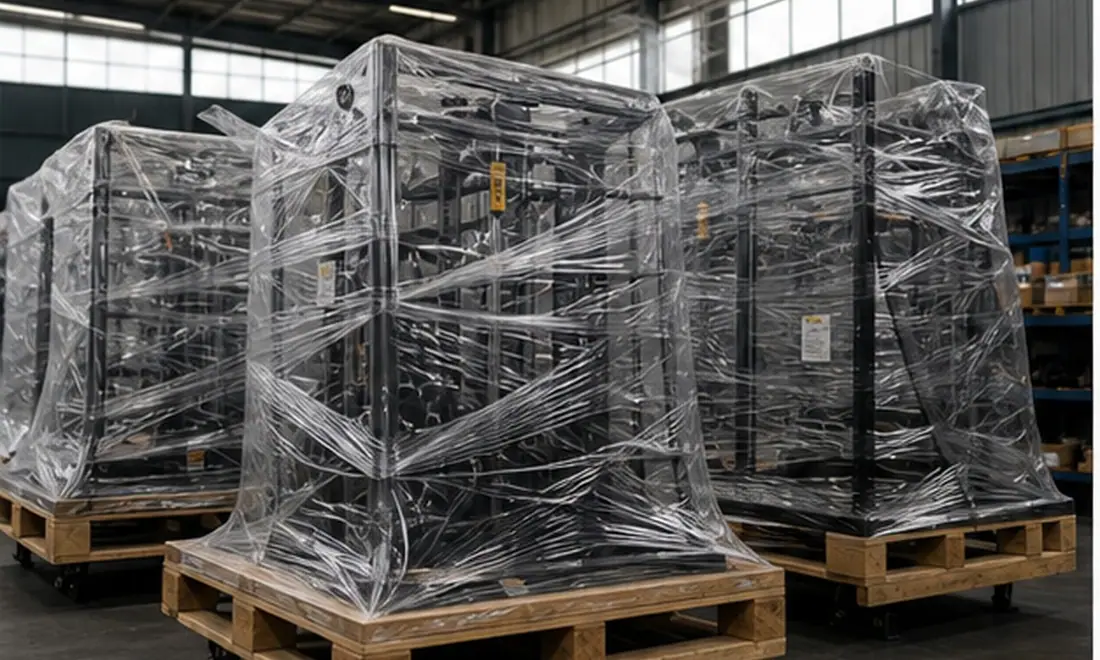
Packaging is part of product quality for export orders. A machine may be built well but still arrive damaged if packaging is weak. Commercial gym equipment has heavy frames, painted surfaces, pads, moving parts and small hardware. Export packaging should protect all of these.
Ask the manufacturer:
- How is each machine packed?
- Are vulnerable areas protected with foam, film or carton?
- Are heavy frames secured?
- Are small parts packed and labeled?
- Are user manuals included?
- Are wooden cases or pallets available if needed?
- Can the factory provide packing photos before shipment?
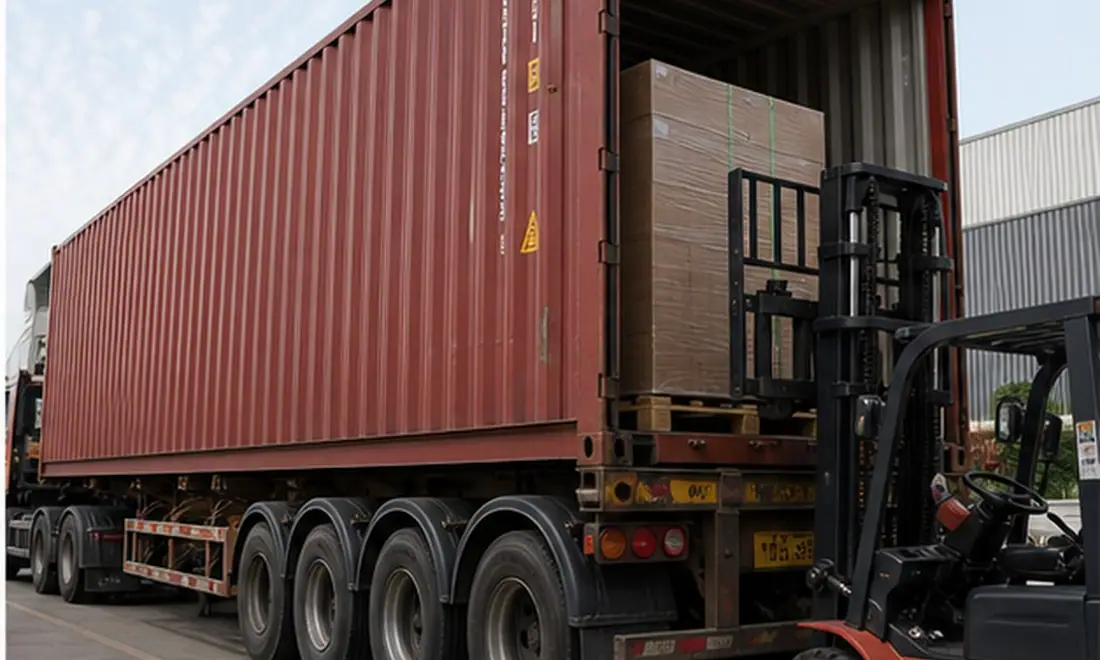
For full-container orders, container loading matters. Machines should be loaded in a way that reduces movement and paint damage. Shipment inspection can include checking model labels, quantity, packing condition and container loading photos.
If you are a distributor, keep a record of packing methods and damage rate by supplier. Over time, this data becomes more useful than sales promises.
Step 7: Confirm OEM and Private Label Details
OEM and private label orders require clear documentation. A simple conversation is not enough. Every customization detail should be confirmed in writing before production.
Important OEM details include:
- Logo file format
- Logo size and position
- Frame color code
- Upholstery color
- Stitching color
- Warning labels
- Weight stack labels
- Packaging design
- User manual language
- Spare parts list
- Product name and model label
For custom logo work, ask for a mockup or pre-production photo. For colors, confirm whether the supplier uses standard available colors or custom color matching. For packaging, confirm carton marks and whether the buyer's brand appears on outer packaging.
Misunderstandings in OEM orders often come from small details. Clear confirmation saves time for both sides.
Step 8: Review Communication Quality
Good communication is part of supplier capability. Commercial gym equipment orders involve specifications, payment, production schedule, customization, inspection, shipping documents and after-sales support. If communication is slow or unclear before the order, it may become worse during production.
Evaluate whether the supplier:
- Answers technical questions directly
- Provides clear model information
- Understands your target market
- Confirms requirements in writing
- Gives realistic lead time
- Explains trade terms clearly
- Shares photos or videos when needed
- Follows up after shipment
Avoid suppliers who only push for payment but do not clarify product details. A professional manufacturer should help reduce uncertainty, not increase it.
Step 9: Understand Warranty and Spare Parts Support
Warranty terms should be specific. Ask what is covered, how long coverage lasts and how replacement parts are handled. For strength equipment, frame warranty may differ from parts warranty. Pads, cables, bearings, pulleys and cosmetic damage may have different policies.
Ask for a spare parts plan, especially if you are a distributor. Common spare parts may include:
- Upholstery pads
- Cable sets
- Pulleys
- Adjustment pins
- Rubber feet
- Handle grips
- Bolts and hardware
- Bearings or bushings
- Weight stack pins
For high-traffic gyms, spare parts availability is important. A small missing part can stop a machine from being used. If you sell to commercial customers, after-sales response can affect repeat orders.
Step 10: Compare Total Value, Not Only Unit Price
Low price is attractive, but total value matters more in B2B purchasing. A lower unit price may become expensive if the supplier has poor packaging, slow communication, missing parts, unstable quality or no spare parts support.
Compare suppliers by:
- Product quality
- Factory capability
- Specification clarity
- OEM experience
- Packaging strength
- Shipment reliability
- Communication
- Warranty and spare parts
- Lead time
- Long-term cooperation potential
If two quotations look different, ask why. One supplier may include stronger packaging, thicker frames or better upholstery. Another may exclude important details. Make sure you are comparing the same requirements.
Red Flags When Choosing a Manufacturer
Be careful if you see these signs:
- The supplier cannot provide real product photos.
- Specifications are incomplete or inconsistent.
- The supplier avoids technical questions.
- OEM details are not confirmed clearly.
- Lead time sounds unrealistic.
- The quotation changes without explanation.
- The supplier refuses reasonable inspection requests.
- Packaging details are vague.
- No spare parts policy is provided.
- Communication becomes slow after price discussion.
One red flag does not always mean the supplier is bad, but several red flags together should slow down the order decision.
Practical Verification Checklist
Before placing an OEM commercial gym equipment order, confirm:
- Product category and model list
- Product specifications
- Factory or production evidence
- Sample or trial order plan
- OEM customization sheet
- Product testing process
- Packing method
- Shipment inspection plan
- Warranty terms
- Spare parts support
- Payment terms
- Lead time
- Shipping documents
- Contact person for after-sales support
This checklist can be used as a supplier qualification document. It helps the buyer and manufacturer stay aligned.
CTA: Need a Manufacturer Review for Your Product List?
If you are preparing an OEM or private label gym equipment order, send your product list, target market and customization needs. WDER can review the models, discuss logo and color options, and provide product details for quotation.
Suggested button: Send Your Requirements
FAQ
How do I know if a gym equipment supplier is a real manufacturer?
Ask for factory photos, production videos, product testing evidence, technical specifications and current product detail photos. You can also request video meetings or third-party inspection if the order value is high.
Should I order a sample before placing an OEM order?
For a first order or new model, a sample or trial order is recommended. It helps you check structure, assembly, finish, packaging and user experience before mass production.
What should I check in a private label gym equipment order?
Check logo placement, frame color, pad color, packaging, user manual, labels, warranty terms and spare parts. Confirm all details in writing before production.
Why is shipment inspection important?
Shipment inspection helps confirm product quantity, packing condition, model labels and visible quality before the goods leave the factory. It reduces the risk of receiving wrong or damaged products.
Is the lowest quotation the best choice?
Not necessarily. For commercial gym equipment, total value includes quality, packaging, communication, lead time, warranty and spare parts support. A very low price may hide risks.
Conclusion
Verifying a commercial gym equipment manufacturer is a practical risk-control process. It helps buyers understand whether the supplier can deliver stable products, support OEM requirements, protect goods during shipment and respond after delivery.
The best supplier is not simply the one with the lowest price or the best catalog. It is the one that understands your market, confirms details clearly, tests products seriously and supports long-term cooperation.
For importers, distributors and private label brands, this verification process can prevent many problems before they reach the customer.
Final CTA
Looking for a commercial gym equipment manufacturer for OEM or private label orders? Contact WDER Fitness Equipment with your product list, logo requirements, target market and estimated quantity. Our team can help prepare model suggestions, customization options and quotation.
Suggested button: Ask for Product Catalog