Introduction
Importing gym equipment from China can be a strong business decision when the buyer needs factory-direct supply, broad product range, OEM customization and export-ready packing. It can also become difficult if the buyer starts with only a price request and no clear product list, destination, quality requirement or shipping plan. Commercial gym equipment is large, heavy and often mixed across categories, so import preparation matters as much as product selection.
This guide explains how overseas buyers can import commercial gym equipment from China in a structured way. It covers supplier verification, product list preparation, OEM details, quotation comparison, quality inspection, packing, container loading and arrival planning. It is written for distributors, gym owners, dealers, importers, hotel gym project buyers and wholesalers who want a practical process before contacting a factory.
WDER Fitness is a [commercial gym equipment manufacturer](/) supporting strength machines, cardio equipment, free weights, OEM/ODM projects and export preparation. Use this article as a checklist before sending your requirements through the WDER contact page.
Step 1: Define the Product Scope
The first step is to define what you want to import. A vague request such as "send gym equipment price" will usually lead to slow communication and inaccurate quotes. A useful inquiry should identify product categories, expected quantity, target market and destination country.
Common commercial gym equipment categories include plate loaded machines, selectorized machines, commercial treadmills, bikes, ellipticals, benches, racks, dumbbells, weight plates, functional trainers and storage systems. A complete gym project may include a mix of all these categories. A distributor order may focus on fast-moving models or a private-label product line. A hotel gym project may need compact cardio, dumbbells, benches and a multi-functional trainer.
If you are planning a full project, review the commercial gym solutions page before requesting a quote. If you are sourcing for a dealer line, start from the product catalog and mark the categories that match your local market.
Step 2: Verify the Supplier Before Discussing Price
Price matters, but supplier reliability matters more. Before comparing quotations, confirm whether the supplier understands commercial use, export packing and OEM communication. Ask for factory information, production photos, product range, quality control process, packing references, certificates if available and case examples.
A reliable manufacturer should be able to explain how machines are produced, inspected and packed. The WDER factory tour gives buyers a reference for the type of proof they should review: material preparation, processing, welding, powder coating, assembly, inspection, packing and container loading.
Do not rely only on polished catalog photos. Ask practical questions: What tube size is used? How are frames inspected? Can you provide packing photos? Can you support logo and color customization? How are spare parts handled? What happens if a part is damaged during shipping? The answers help reveal whether the supplier can support real overseas buyers.
Step 3: Prepare OEM and Branding Details Early
Many importers and distributors want private-label gym equipment. OEM work should be prepared before quotation and production, not after. If you need custom logo, frame color, upholstery color, handle details, labels, instruction manuals or packaging, send those requirements early.
WDER's OEM gym equipment support can include logo placement, color matching, upholstery options and packaging planning depending on product category and order quantity. Buyers should send vector logo files, color references, product list, target market and first-order quantity. If the order is for a local dealer brand, also think about whether the same appearance should continue across future orders.
Late changes create risk. A color or logo change after production has started may delay the order or create inconsistent products. Good import planning means confirming brand details during quotation and pre-production review.
Step 4: Compare Quotations Correctly
A commercial gym equipment quotation should be more than a unit price. It should include model name, dimensions, quantity, customization details, packing method, estimated lead time, payment terms, trade terms and validity period. If two quotes are very different, check whether they include the same product configuration and packing assumptions.
For heavy equipment, shipping volume and packing method can affect landed cost. A cheaper machine may become expensive if it is poorly packed, takes more container space or creates after-sales problems. Ask whether the price includes export packing, spare parts, labels and loading support. Ask which Incoterm is used, such as EXW, FOB or CIF.
When comparing suppliers, also consider communication quality. If a factory cannot clearly confirm product details before the order, the risk is higher after deposit. Import buyers should reward clarity, not only the lowest price.
Step 5: Confirm Export Packing and Loading Plan
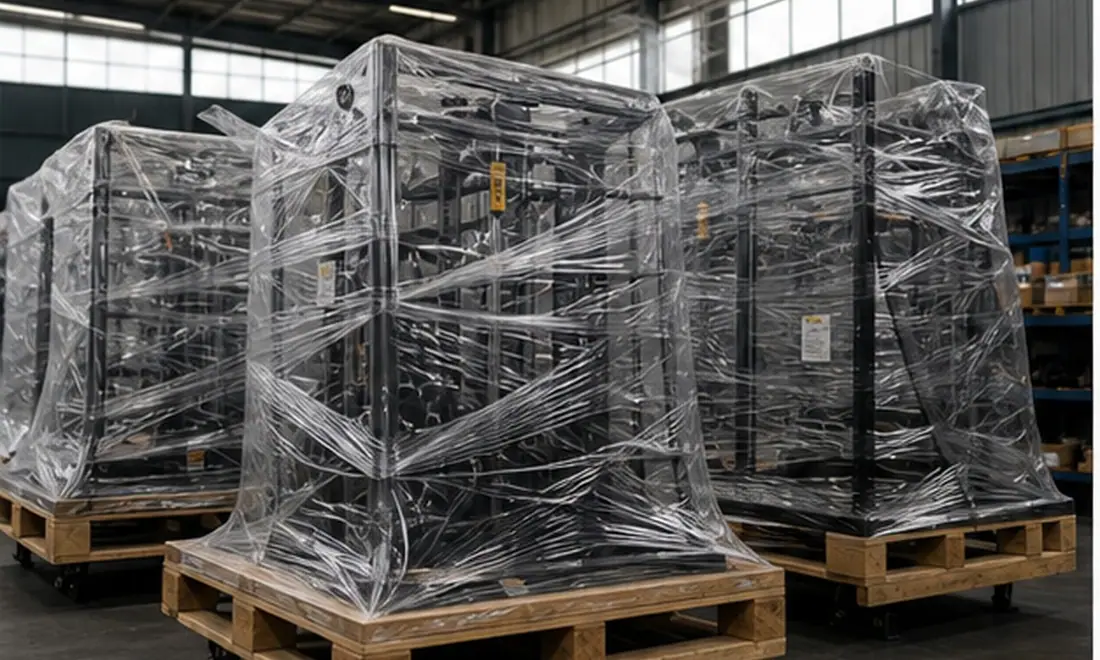
Packing is one of the most important parts of importing gym equipment from China. Commercial strength machines have painted frames, pads, handles, bolts and moving parts. Cardio machines include consoles, motors and covers. Dumbbells and plates are heavy and need strong cartons or pallets. A mixed container requires careful labeling and loading order.
Ask the supplier how each category will be packed. Confirm whether frames are wrapped, whether pads are protected, how small hardware is labeled, and whether wooden pallets or cases are used for certain products. Ask for photos before loading, especially for first orders or large mixed-container projects.
The commercial gym equipment shipping guide explains packing, inspection and container loading in more detail. Buyers should also prepare receiving staff to check labels, quantities and carton condition when the goods arrive.
Step 6: Prepare for Arrival and Installation
Import work does not end when the container leaves China. Buyers should prepare unloading, storage, access routes, tools, installation team and floor protection before the goods arrive. For a commercial gym project, check door width, elevator access, stairs, ceiling height and whether heavy machines can be moved safely to their final location.
If the order includes many machines, organize installation by zone. Strength machines, cardio equipment, benches, racks and free weights should be placed according to the layout plan. Keep hardware packages and labels together. Take photos of any damaged cartons before opening them and report issues quickly.
The installation preparation guide can help buyers avoid common mistakes after arrival. Good installation preparation reduces delays and helps the gym open faster.
Common Import Mistakes to Avoid
The first mistake is asking only for price. Without product categories, quantity and destination, the quote is weak. The second mistake is ignoring packing. Export packing protects the order and should be part of the supplier comparison. The third mistake is confirming OEM details too late. Logo, color and packaging should be agreed before production. The fourth mistake is choosing a supplier without checking factory process or quality control. The fifth mistake is not preparing installation access before the shipment arrives.
A strong importer thinks through the full chain: product selection, supplier verification, OEM confirmation, quotation, inspection, packing, shipping, customs, arrival and installation. Each step reduces risk.
Documents and Communication Buyers Should Organize
Import buyers should keep all order details organized in one place. This includes the signed quotation, proforma invoice, model list, quantity, color confirmation, logo files, packing requirements, payment record, production timeline, shipment terms and contact person for both sides. If the order includes many machines, request a packing list that separates strength machines, cardio equipment, benches, racks, dumbbells and accessories.
Clear documentation helps when customs, freight forwarders, warehouse staff or installation teams ask questions. It also protects the buyer if there is a mismatch between ordered and received goods. For OEM orders, keep approved logo mockups and color references with the order file. For project orders, keep the floor plan and zone list together with the model list.
Communication rhythm also matters. Agree when the supplier will update you: after deposit, before production starts, during production if needed, before packing, before container loading and after shipment booking. A serious factory should not disappear between deposit and loading. Buyers do not need daily messages, but they do need clear milestones.
Finally, plan customs and local responsibilities early. WDER can support export preparation, but the importer should confirm local import duties, product compliance questions, unloading equipment, delivery address, warehouse access and installation schedule. These details are outside the factory gate, but they decide whether the project opens smoothly after the container arrives.
For first-time buyers, it is also useful to define one internal owner for the import project. That person should control the latest model list, approved quotation, payment schedule, shipping contact and installation preparation. When too many people send separate instructions to the supplier, mistakes become more likely. A single organized contact helps the factory respond faster and keeps the order consistent from quotation to loading.
This also makes later reorders easier to compare and repeat.
FAQ
Is importing gym equipment from China suitable for small gyms?
It can be suitable if the order size, shipping cost and product mix make sense. Small gyms often benefit from mixed equipment packages, but buyers should confirm MOQ, packing volume and landed cost.
What should I send to get a useful quotation?
Send product categories, model list if available, quantity, destination country or port, OEM requirements, color preferences and project size. A floor plan is useful for complete gym projects.
Can I import OEM gym equipment from China?
Yes. Many WDER commercial equipment lines support OEM options such as custom logo, frame color, upholstery color and packaging, depending on order quantity and product category.
Should I inspect goods before shipment?
For first orders or large projects, shipment inspection is recommended. Ask for production photos, function testing, packing photos and container loading references.
How do I reduce shipping damage?
Confirm packing methods before shipment, request clear labels, protect painted frames and pads, and make sure heavy items are palletized or packed appropriately for the route.
Suggested CTA
Preparing to import gym equipment from China? Send your product list, quantity, destination country, OEM needs and shipping terms through the WDER contact page. WDER can help review product options, quotation details, factory inspection and export packing.
Schema Markup Suggestion
Use Article schema, FAQPage schema and BreadcrumbList schema. Link this guide to the factory page, product catalog, OEM page, shipping guide and contact page.