Introduction
Choosing commercial gym equipment for a new gym is not the same as buying a few machines for a home training room. A new commercial facility needs equipment that can handle daily traffic, different user levels, repeated adjustment, cleaning, maintenance, and long-term member expectations. For overseas buyers, the decision also includes supplier reliability, packing, shipping, installation preparation, spare parts, and whether the equipment can match a brand concept through OEM or ODM customization.
A good equipment list should help the gym make money. It should support the target members, guide traffic flow, make coaching easier, reduce maintenance pressure, and give the owner a clear story when selling memberships. A poor list usually creates the opposite result: too many isolated machines, weak free-weight planning, limited beginner-friendly stations, poor spacing, and expensive equipment that does not match the local market.
This guide explains how to choose commercial gym equipment for a new gym from a buyer's point of view. It is written for gym owners, distributors, hotel gym project buyers, school and corporate fitness rooms, and importers who need to compare factories before placing an order. If you already have a floor plan, WDER can help review it through the commercial gym solutions process and prepare a quotation through the contact page.
Start With the Business Model, Not the Machine List
Before choosing models, define what the gym must do commercially. A bodybuilding-focused club needs a different mix from a hotel gym, a women-only studio, a school fitness room, or a distributor showroom. The best first question is not "which machine is popular?" but "who will use this gym every day and why will they come back?"
A local commercial fitness club usually needs a broad mix of selectorized machines for beginners, plate loaded machines for stronger users, cardio equipment for daily traffic, a free-weight zone, benches, racks, cable systems, and a small functional area. A hotel gym may need fewer heavy machines and more compact cardio, dumbbells, benches, and a functional trainer. A distributor showroom needs models that are easy to explain, easy to sell repeatedly, and suitable for OEM branding.
For new projects, create a simple buyer profile. List the target members, expected peak-hour traffic, membership price level, coaching services, floor size, and the local market's equipment preferences. Then use that profile to choose equipment categories. This prevents the common mistake of copying another gym's photos without understanding whether those machines fit your own users.
Plan by Training Zone Before Choosing Models
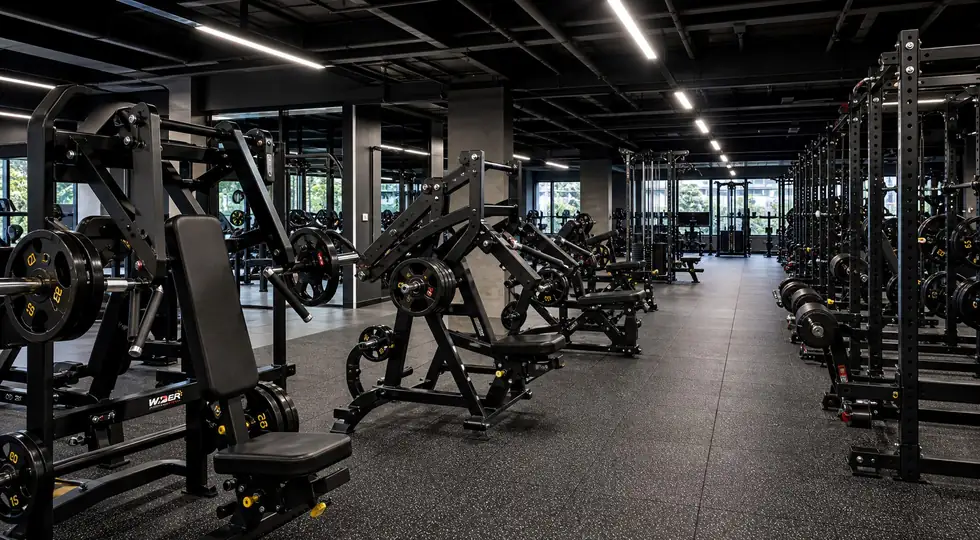
A new gym should be planned by zones. The core zones usually include strength, cardio, free weights, functional training, stretching, storage, reception, and traffic lanes. If the project is small, some zones can be combined, but the logic should still be clear. Buyers who skip zoning often discover after shipment that machines block walkways, benches face the wrong direction, or dumbbell racks are too close to heavy plate loaded machines.
For a 100-300 sqm starter gym, the priority is coverage and clarity. The equipment list may include 6-12 core strength stations, several cardio units, adjustable benches, dumbbells, a storage rack, and a cable or functional trainer. For a 300-800 sqm commercial club, the plan can include separate selectorized and plate loaded areas, a stronger free-weight zone, more cardio variety, and dedicated functional training. For 800 sqm and above, equipment quantity, traffic flow, and installation sequence become more important because the project may involve multiple containers and several training zones.
When you work with a [commercial gym equipment manufacturer](/), send the floor plan, ceiling height, entrance size, columns, target users, preferred zones, and any brand requirements. A factory cannot make a useful recommendation from only "send me your best price." Better input creates better product matching, more accurate packing estimates, and fewer changes after quotation.
Choose Strength Equipment for Different User Levels
Strength equipment is usually the heart of a commercial gym. A balanced strength area should serve beginners, intermediate members, advanced lifters, and personal trainers. Selectorized strength machines are useful because beginners can adjust the weight stack easily and train with a guided movement path. Plate loaded machines are attractive for stronger members because they feel more direct, support heavy training, and are often easier to maintain.
A new gym does not need every possible machine. It needs enough movement coverage: chest press, shoulder press, lat pulldown, seated row, leg press, leg extension, leg curl, glute or hip equipment, abdominal training, benches, racks, and cable stations. The exact list depends on floor area and user profile. If your market values serious strength training, a stronger plate-loaded zone can help the gym look more professional. If the gym focuses on general fitness, selectorized machines may be safer and easier for first-time users.
WDER's plate loaded row machine page shows the type of product details buyers should check: movement path, grip options, frame structure, loading capacity, dimensions, OEM options, and packing support. The same logic applies to other strength machines. Buyers should confirm not only the photo, but also size, tube thickness, frame finish, upholstery, handles, bearings, cable routing, and spare parts.
Select Cardio Equipment by Use Time and Maintenance Risk
Cardio equipment is highly visible and often heavily used. For new gyms, treadmills are usually the first cardio product buyers ask about, but the final list may also include upright bikes, recumbent bikes, ellipticals, stair trainers, rowing machines, or air bikes. The right mix depends on the gym's member base and local expectations.
Commercial treadmills should be chosen with special care because they include electronics, motors, running belts, decks, consoles, and shock absorption systems. Buyers should check power requirements, running area, maximum user weight, motor rating, console function, and after-sales spare parts. For hotel and apartment gyms, lower noise and simpler operation may matter more than advanced programs. For high-traffic clubs, durability and service access become more important.
If you are planning a cardio area, use the commercial cardio equipment guide and connect it with the main product catalog. When requesting a quotation, include quantity, voltage requirements, destination country, expected usage, and whether the units will ship with strength equipment in the same container.
Do Not Treat Free Weights as an Afterthought
The free-weight area has a strong influence on how members judge the gym. Dumbbells, benches, racks, barbells, plates, kettlebells, and storage systems should be planned together. A small gym can look professional if its free-weight zone is well organized. A large gym can feel messy if dumbbells, plates, and benches are scattered without a clear layout.
For dumbbells, decide the weight range first. A hotel gym may need lighter ranges. A commercial club usually needs progressive pairs that support daily training. A strength-focused gym may need heavier dumbbells, stronger racks, more benches, and safe clearance around users. For distributors, packaging, labeling, pallet loading, and repeat ordering are also important.
The commercial dumbbell buying guide and the free weight area planning guide explain this in more detail. Free weights are simple products on the surface, but overseas orders still need clear specifications, finish confirmation, rack design, packing method, and weight labeling.
OEM and Brand Appearance Matter for New Gyms
A new gym is also a brand. Equipment color, upholstery, logo placement, and product consistency affect how the space feels when members walk in. For distributors and private-label brands, OEM details may influence local sales and repeat orders. WDER supports OEM gym equipment options such as custom logo, frame color, upholstery color, selected handles or accents, packaging requirements, and product range planning.
OEM work should be confirmed before production. Buyers should send logo files, color references, preferred product series, target market, and packaging requirements. Avoid changing color or logo details after production begins. It creates delays and increases the risk of mismatch. A practical factory will help buyers confirm mockups, product list, and order details before mass production.
Factory, Quality Control and Export Packing Checks
A new gym project often involves many machines and a large investment. Buyers should check the factory process before placing the order. Useful proof includes production photos, welding or assembly scenes, quality control process, packing references, certificate documents, and case studies. The WDER factory tour is designed to help overseas buyers understand the manufacturing process from steel processing and welding to assembly, inspection, packing, and container loading.
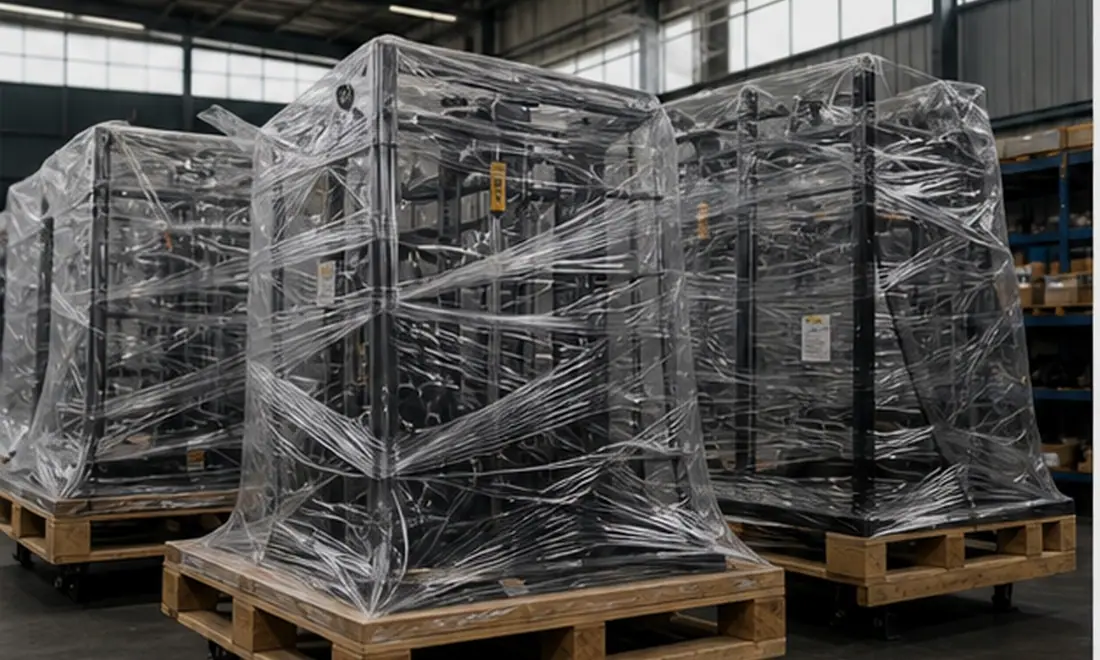
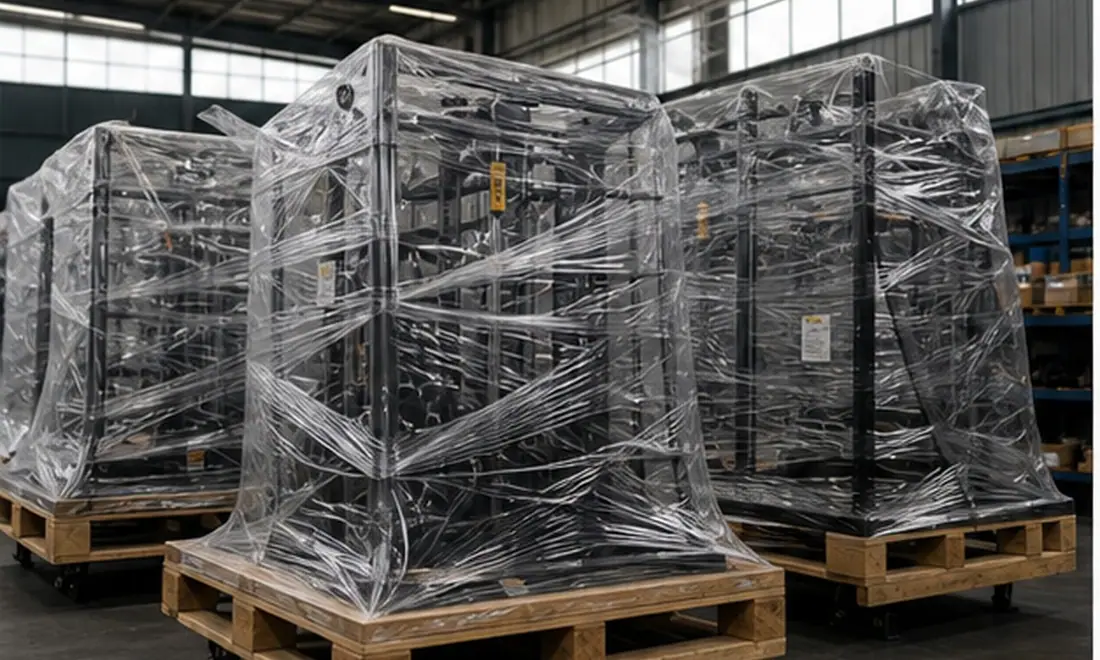
Quality control should include material checks, welding inspection, assembly review, movement testing, appearance review, hardware confirmation, and packing inspection. For export orders, packing is not a small detail. Strength machines, cardio consoles, upholstery, powder coating, small hardware, and instruction materials must be protected during transportation.
Buyers should ask how the supplier handles packing marks, carton labels, spare parts, container loading, and shipment photos. A well-packed order reduces scratches, missing parts, and installation delays. It also helps the local team identify each unit when the container arrives.
What to Send Before Asking for a Quote
A strong inquiry saves time. When contacting WDER through the inquiry form, include your gym type, floor size, target users, product categories, quantity range, destination country, OEM needs, budget range if available, and preferred shipment terms. If you have a floor plan, attach it or describe the room dimensions and entrance conditions.
Do not ask only for the cheapest price. Commercial equipment is not a commodity if the order includes multiple categories, customization, export packing, and installation planning. Ask for a practical product mix, model suggestions, packing estimate, lead time, and supplier responsibilities. This gives you a better basis for comparison.
FAQ
What equipment does a new commercial gym need first?
Most new gyms need selectorized strength machines, plate loaded machines, cardio equipment, dumbbells, benches, racks, cable or functional training equipment, storage and stretching space. The exact mix depends on floor size, users and budget.
Should I buy all equipment from one manufacturer?
For a new project, one reliable factory or supplier can simplify product matching, color consistency, packing, loading and after-sales communication. Some buyers still combine suppliers, but that increases coordination work.
Can commercial gym equipment be customized?
Yes. Many WDER product lines support logo, frame color, upholstery color and packaging customization. The options depend on product category, order quantity and production schedule.
How do I avoid buying the wrong machines?
Start from the business model and training zones. Share the floor plan, target users and product priorities with the supplier before confirming models. Review dimensions and user clearance carefully.
What is the best next step for a new gym project?
Prepare a floor plan, equipment category list and destination country, then contact WDER for a practical product recommendation and quotation path.
Suggested CTA
Ready to build a new gym equipment list? Send your floor size, target users, product categories, quantity and destination country through the WDER contact page. WDER will help review the equipment package, OEM options, quality control and export packing requirements.
Schema Markup Suggestion
Use Article schema, FAQPage schema and BreadcrumbList schema for this guide. Link the guide to the product catalog, gym solutions page, factory page and contact page.