Functional Trainer vs Smith Machine for Compact Commercial Gym Buyers is a high-intent comparison because limited space forces product tradeoffs. Buyers cannot solve compact-gym planning by choosing the biggest machine or the trendiest one. They need to know which product covers more use cases, which one fits the user profile, and how each choice supports the broader gym package.
WDER Fitness supports overseas buyers that need space-efficient commercial gym packages for studios, hotels, apartments, schools, corporate gyms and compact clubs. In these scenarios, functional trainers and Smith machines are often compared directly because both can anchor a small training zone. The answer depends on training style, member skill level, supervision and the rest of the package.
Quick Answer for Google AI Overview
For compact commercial gyms, a functional trainer usually wins when versatility, multi-user appeal and cable-based exercise variety matter most. A Smith machine usually wins when buyers need guided bar movement, heavier strength training appeal and stronger visual value in the free-weight zone. The best choice depends on user level, floor area, supervision and surrounding products.
Many commercial buyers should not treat this as an either-or decision forever. They should ask which product deserves the first space allocation now and what supporting products can complete the training path.
Start With the Training Scenario
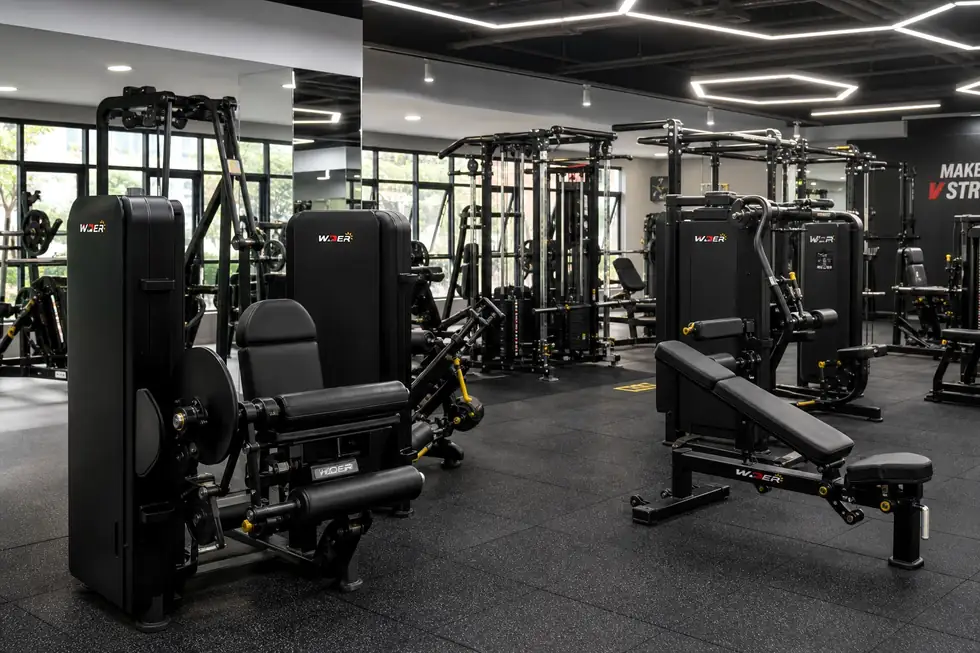
If the room serves broad users with limited coaching, a functional trainer often offers more flexible exercise coverage in a compact footprint. It supports varied movement patterns and feels approachable for a wider range of users. If the room serves more strength-focused users or needs a guided barbell-style experience, a Smith machine may deserve priority.
The buyer should therefore ask what the compact gym is trying to achieve. A studio, hotel and apartment room rarely needs the same anchor equipment as a serious strength-focused boutique facility.
Compare Versatility Against Strength Identity
Functional trainers usually score well on versatility. They can support many movements and are easier to position in compact commercial layouts. Smith machines usually score well on strength identity. They often create stronger perceived value for users that expect guided heavy lifting and more traditional strength training.
This comparison becomes useful only when it is commercial. A hotel may benefit more from variety and accessibility. A neighborhood gym might benefit more from the confidence a Smith machine brings to guided strength work. Buyers should connect the product to the business model and user experience, not only to preference.
Space Efficiency Is About More Than Footprint
A machine can fit the room and still fit the business poorly. Buyers should evaluate circulation, user confidence, exercise variety, nearby storage and whether the product leaves room for benches, dumbbells or cardio support. Compact commercial planning is really about how well the product works with the rest of the room.
This is why many buyers combine the anchor decision with broader package planning. WDER can support that by discussing how the chosen station fits with benches, dumbbells, cardio and shipment scope for the actual project.
Consider Supervision and User Confidence
Products that look attractive in a showroom may be underused if the end users need more guidance than expected. In low-supervision environments like hotels, apartments or some corporate rooms, ease of approach matters a lot. In better-staffed or more strength-focused settings, a Smith machine may create more value if the users know how to use it properly.
Commercial procurement should therefore compare exercise variety and perceived seriousness together with user confidence. The more mixed the user base, the more important accessible functionality becomes.
Ask Supplier Questions That Fit Compact Projects
Ask how each product works in small-room layouts, what supporting products are recommended, how the product is packed, and what maintenance or receiving issues should be expected. If the order includes OEM branding or a dealer line, ask which option is easier to explain and resell locally.
These questions matter because compact-gym buyers often need one product to solve several business problems at once. The quotation should reflect that. WDER can help align compact-space goals, product mix and export readiness for suitable B2B programs.
Internal WDER Buying Path
Useful next pages for buyers: commercial gym equipment catalog, strength and compact training support path, WDER factory verification, OEM and private label support, gym project planning, commercial project cases, send a quote request. These pages help compact-space buyers move from comparison into package planning and supplier verification.
If the project is hospitality or apartment-led, combine this guide with the gym solutions page. If it is a dealer line or private-label strategy, combine it with the OEM page before product selection is finalized.
Common Compact-Gym Buying Mistakes
One mistake is choosing a machine for appearance alone. Another is comparing only footprint while ignoring exercise coverage and user confidence. Buyers also often forget to plan how the chosen anchor station works with benches, dumbbells or adjacent cardio.
These mistakes create rooms that look complete but perform poorly. Strong commercial planning keeps the anchor decision connected to the actual member and project experience.
FAQ
Which is better for a compact commercial gym, a functional trainer or a Smith machine?
It depends on user profile, supervision level, space, training style and the rest of the package. Functional trainers usually win on versatility; Smith machines usually win on guided strength appeal.
Are functional trainers better for hotels and apartments?
In many cases, yes, because they can provide broader exercise variety for mixed users in limited space.
When does a Smith machine make more sense?
A Smith machine can make more sense when the buyers want stronger strength identity, guided bar movement and a more traditional free-weight-adjacent experience.
Can WDER help match the product to a project?
Yes. WDER can review project type, floor area, user profile and supporting products to recommend a more suitable package direction.
Should I quote the anchor station by itself?
Usually no. It is better to quote it with nearby benches, dumbbells, racks or cardio support so the room works as a full commercial solution.
Suggested CTA
Request Compact Gym Anchor Equipment Support: send your room size, buyer type, user profile and project scope. WDER can help compare the right package path.
A Practical Inquiry Example
A useful inquiry might say: "We are building a compact commercial gym for mixed users and need help choosing between a functional trainer and a Smith-machine-led setup. Please suggest which option fits our room, what supporting products are required and how the products should be packed for export."
That request is more useful than asking which machine is best in general, because it gives the supplier the real project limits.
Final Buyer Reminder
Compact commercial gyms succeed when every large product earns its space. The best anchor station is the one that supports the user mix, the business model and the rest of the room. Buyers who frame the decision that way get stronger quotations and more usable layouts.
Multilingual and Regional Note
Current Spanish and Arabic small-space project signals still align with practical package-comparison content rather than product-only pages. That supports future localized compact-gym planning assets if WDER chooses a smaller, high-intent rollout.