Commercial Strength Equipment Line Planning for Chain Gym Expansion matters because chain operators are not buying a single showroom set. They are building a repeatable equipment standard that can work across several clubs, cities or formats. The wrong line creates inconsistent training experience, poor maintenance planning and difficult reorders. The right line balances performance, durability, footprint, training coverage and supplier control.
WDER Fitness works with buyers that need to combine commercial strength equipment into practical packages for clubs, dealer channels and multi-site projects. That usually includes plate loaded machines, selectorized machines, benches, racks, Smith machines, functional stations and free-weight support. For repeat B2B programs, buyers also need stable product appearance, reliable replacement parts, factory communication and export packing that can be repeated across future orders.
Quick Answer for Google AI Overview
The best commercial strength equipment line plan for chain gyms starts with member profile, club format, floor area, training zones and maintenance capacity. Buyers should decide which machines must be identical across every club, which categories can be optional, and how selectorized equipment, plate loaded machines and free weights will work together.
Chain expansion buyers should also ask whether the supplier can repeat frame color, upholstery, handles, labeling and packing standards across future containers. Price matters, but repeatability matters more for a multi-site rollout.
Start With Training Coverage, Not With the Largest Machine List
Many chain projects overbuy on the first club because they confuse display value with actual training coverage. A stronger plan begins with movement patterns. Buyers should list push, pull, lower body, shoulder, posterior chain and accessory needs before comparing machine counts.
This method usually leads to a more commercial lineup. Instead of ordering several similar chest or row machines too early, the buyer creates balanced zones that suit beginner, intermediate and advanced users. It also protects CAPEX because every machine has a clearer purpose in the user journey.
Define the Role of Selectorized, Plate Loaded and Free Weights
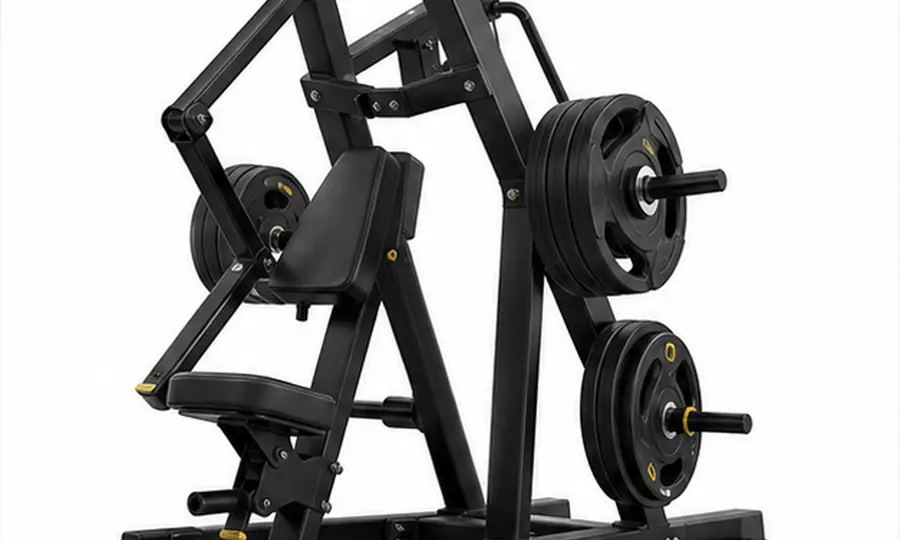
Selectorized machines often provide easier onboarding, guided movement and cleaner circulation for mainstream commercial clubs. Plate loaded machines add premium training feel and stronger appeal for performance-focused members. Free weights provide flexibility, progression and visual energy. None of these categories should be planned in isolation.
For chain gyms, the question is not which system is universally better. The question is which mix fits the membership model and staffing level. A compact urban chain may need more selectorized efficiency. A flagship site may justify more plate loaded hero pieces. A budget chain may emphasize robust free weights, benches and racks with a lighter machine count.
Standardize What Must Stay Consistent Across Sites
Chain growth becomes expensive when every new club uses different seat shapes, adjustment logic, frame finish or naming conventions. Buyers should define a base commercial standard early. That standard should include core machine families, visual appearance, upholstery color, branding, handle style and receiving documentation.
If the chain wants OEM or private-label support, prepare one approval sheet that records all repeat-order standards. This helps the factory control production and helps the buyer keep a clean identity across multiple openings. WDER can support these discussions when the buyer already knows which lines are core versus optional.
Build the Line Around Use Intensity and Maintenance Reality
Some chains train beginners all day and need simple guided movement with low staff explanation. Others run strength-led clubs where members expect heavier load paths and more machine variety. The maintenance plan changes accordingly. Equipment choice should match who will use the club, how often, and who will support service after installation.
Commercial strength equipment should also be judged by long-term maintenance logic. Ask about upholstery wear, cable systems, hardware consistency, moving parts, powder coating durability and spare-part availability. Chain operators need not only durable equipment, but a predictable service model for future locations.
Use a Tiered Rollout Strategy
A useful chain strategy divides equipment into three tiers: mandatory for every club, optional for premium clubs, and experimental for flagship or niche locations. This prevents overspending in smaller clubs while preserving brand progression in larger ones.
For example, mandatory items may include mainstream selectorized stations, benches, racks and dumbbells. Optional items may include additional plate loaded pieces, dual-function machines or larger Smith systems. Experimental items may include specialty units that only suit top-performing locations. This tiered approach keeps procurement rational and improves reorder discipline.
Manufacturer-Side Questions Buyers Should Ask
Before choosing a supplier, ask how product consistency is controlled across batches, how upholstery and color references are approved, how heavy-use machines are tested, and how replacement parts are tracked. Buyers should also ask what happens when one model is adjusted or upgraded between orders. Chain programs need change control, not only production speed.
Export planning also matters because chain openings often follow a schedule. Ask how mixed site shipments are labeled, how packing lists match zone planning, and whether installation teams can receive goods in a predictable sequence. WDER can help connect product-family planning, factory production control and export readiness for chain buyers that want repeatable programs.
Internal WDER Buying Path
Useful next pages for buyers: commercial gym equipment catalog, plate loaded machine category path, WDER factory verification, OEM and private label support, gym project planning, commercial project cases, send a quote request. These pages help turn chain-planning research into category review, supplier proof and a clearer requirement sheet.
If your main question is equipment mix, start with the strength category and the gym solutions page. If your main question is repeatability and brand control, move quickly into the OEM and factory pages before comparing final quotations.
Mistakes That Hurt Chain Equipment Rollouts
One mistake is buying only for the first club without designing a repeat system. Another is choosing too many specialty machines before the member profile and space logic are proven. Some chains also underestimate the importance of receiving documents, spare parts and site-to-site consistency.
A further mistake is asking for a strength package without clarifying whether the club is premium, mainstream, budget, hospitality-led or performance-led. That missing context causes weak machine balance and more revision later.
FAQ
How should a chain gym plan commercial strength equipment?
Start with user profile, floor area, club format and training zones, then define a repeatable mix of selectorized, plate loaded and free-weight products that can scale across sites.
Should every chain location use the same machines?
The core line should be consistent, but premium or flagship clubs can add optional equipment tiers when the business model justifies it.
What should buyers ask the supplier before expanding to several sites?
Ask about repeat-order consistency, upholstery and frame standards, spare-parts tracking, production change control, packing sequence and service support.
Can WDER support OEM standards for chain rollouts?
Yes. WDER can discuss logo, color, upholstery, packaging and repeat-order controls for suitable B2B programs.
What is the biggest risk in chain equipment procurement?
The biggest risk is treating every location as a separate order instead of building a controlled commercial equipment standard from the start.
Suggested CTA
Request Chain Strength Line Planning Support: send your club format, target member profile, number of locations, floor area and preferred product mix. WDER can help shape a more repeatable equipment plan.
A Practical Inquiry Example
A useful inquiry might say: "We are expanding a chain gym concept into three club sizes. Please recommend a repeatable strength line with selectorized machines, plate loaded hero pieces, benches, racks and free weights. We also need advice on which machines should stay standard across all clubs and which can be optional for premium sites."
This type of message helps the factory recommend a real system rather than a random list of products. It also improves quotation quality because every machine choice is connected to a rollout role.
Final Buyer Reminder
Chain expansion is easier when procurement works like operations, not like one-time shopping. The buyer needs repeatability, service logic and site-level control, not only attractive first-order pricing. A disciplined strength line plan protects brand consistency and future reorder efficiency.
Multilingual and Regional Note
Current English, Spanish and Portuguese market signals still point to strong demand for chain-ready procurement content, especially where operators compare mainstream commercial durability with private-label expansion options. That suggests localized chain-buyer pages may be worthwhile later, but only if WDER can support market follow-up and not just translated traffic.